


Pressure Cooker vs. Slow Cooker: Which One Do You Actually Need?
2020 Aug 14th
Many folks have misconceptions about the good old pressure cooker being dangerous, thinking the slow cooker might be a safer choice; they reach for that appliance instead. Both machines cook food into moist, mouthwatering, fall-off-the-bone, delicious goodness.
Whether using the pressure cooker or slow cooker, both are simple to use by tossing all your ingredients in the pot. However, was that decision correctly based on facts or just myths of the past? We will uncover the underlying truths about both vessels and how to utilize each appliance to its fullest potential.
Here's how to choose and why plenty of well-equipped kitchens end up with both.
The Short Answer
- Buy a pressure cooker if you decide what's for dinner at 6 p.m. and want it on the table by 7.
- Buy a slow cooker if you'd rather make that decision at 7 a.m. and not think about it again until you walk through the door.
- Buy both if you cook braises, beans, stocks, and stews regularly. They complement each other more than they overlap, and they're two of the least expensive appliances that genuinely change how you cook.
Pressure Cooker vs. Slow Cooker at a Glance
| What Matters | Pressure Cooker | Slow Cooker | The Verdict |
|---|---|---|---|
| Time | Most braises finish in 20–50 minutes at pressure, plus time to come up and release. | 4–6 hours on High, 8–10 hours on Low | Pressure cooker, by a wide margin. Dried beans go from an overnight job to under an hour. |
| Texture | Tender fast, but the window is narrow: a few extra minutes turn vegetables to mush. Sauce stays thin because nothing evaporates. | Gentle, forgiving heat. Collagen breaks down slowly, flavours concentrate, and an extra 30 minutes rarely ruins anything. | Slow cooker for depth and forgiveness. Pressure cooker gets you most of the way there in a fraction of the time. |
| Hands-off | Needs you at both ends: sear and seal at the start, release and finish at the end. | Load it, set it, leave the house. | Slow cooker. This is the whole reason it exists. |
| Best suited to | Dried beans and legumes, stock and bone broth, brisket and shanks, risotto, whole grains, steamed puddings | Chili, pulled pork, stews and curries, hot dips, overnight oats and porridge, cobblers and cheesecake | Split decision: the menus barely overlap, which is the case for owning both |
| Kitchen heat and energy | A short, contained burst barely warms the room | Low wattage over many hours, still far less than running the oven all afternoon | Both beat the oven. Pressure cooker wins in a Canadian August; slow cooker earns its keep in February. |
| Learning curve | Read the manual once. Respect the minimum liquid and maximum fill lines. | Essentially none: lid on, dial set | Slow cooker for a first-time cook or a gift |
How Each One Actually Works
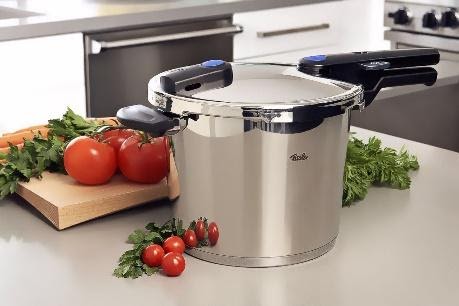
Pressure Cooker
It traps steam in a sealed pot and the pressure inside climbs. That raises the boiling point of the liquid from 100 °C to roughly 115–121 °C, and hot pressurised steam is forced into the food from every direction. Higher temperature plus better heat transfer is what collapses connective tissue in a fraction of the usual time.
The idea isn't new. French physicist Denis Papin demonstrated a steam-pressure cooking vessel in the 1670s, and cast-iron domestic models appeared in Europe by the 1860s. What has changed is the engineering: today's stovetop and electric models add PSI selection, automatic pressure release, and lids that physically cannot be opened until the pressure has dropped. Electric multi-function models, like the All-Clad electric pressure cooker, bundle sauté, steam, braise, and roast programs into the same appliance.

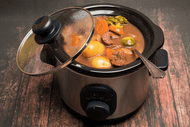
Slow Cooker
A slow cooker is the opposite bet: no pressure, no rush. An electric element in the outer casing heats a heavy ceramic or stoneware insert, and a lid with a gasket keeps moisture in. Low plateaus around 90 °C and High around 100 °C; both settle at or just below a simmer, High simply arrives sooner. That long, even, gentle heat is what melts collagen into gelatin and gives slow-cooked food its body.
Irving Naxon patented the original bean-cooking version in 1940; Rival bought the design and launched the Crock-Pot in 1971. The concept has barely needed improving. Programmable timers and keep-warm functions are the main additions.
What to Cook in Each
Reach for the pressure cooker when…
- You forgot to soak the beans. Dried chickpeas, black beans and lentils cook through in 25–45 minutes with no soaking at all.
- You want stock today. A chicken carcass gives up everything it has in about an hour instead of simmering all afternoon.
- The cut is genuinely tough. Beef shank, oxtail, brisket, pork hock.
- It's 30 °C outside. No oven, no long simmer, no steamy kitchen.
- You want risotto without stirring. Six or seven minutes at pressure, no ladling.
Reach for the slow cooker when…
- You want dinner ready when you get home. The morning-load, evening-eat routine no other appliance matches.
- You're feeding a crowd. Chili, pulled pork, butter chicken and hot dips all hold beautifully on Keep Warm through a party.
- The recipe wants time to develop. Curries, ragùs and bean stews taste deeper after eight hours than after 40 minutes; there's no shortcut around that.
- Breakfast should make itself. Steel-cut oats and congee overnight on Low.
- Dessert needs a gentle hand. Cobblers, brownie puddings and cheesecake all work in stoneware.
When to Use Both
The two appliances aren't rivals in a well-run kitchen, they're a relay team. Three combinations worth knowing:
- Pressure first, slow second. Pressure-cook dried beans until just tender, then move them into the slow cooker with aromatics and stock to finish. You skip the overnight soak and still get the long, melded flavour.
- Slow first, pressure (or stovetop) second. Slow cookers don't reduce liquid, so braises can finish watery. Lift the meat out, reduce the cooking liquid hard in the pressure cooker insert on its sauté setting, and pour it back as a proper sauce.
- Two vessels, one dinner party. Cook the main under pressure an hour before guests arrive while the slow cooker holds a dip or a side at serving temperature. Peak-season entertaining is far easier with a second heated vessel that doesn't need the stovetop.
What About Multi-Cookers?
A multi-cooker is a pressure cooker with a slow-cook program bolted on, plus sauté, steam, rice and often yogurt functions. It's genuinely convenient, and for a small kitchen with limited storage it's often the right call.
The trade-off is on the slow side, not the pressure side. Pressure cooking in a multi-cooker is excellent. But its slow-cook mode heats a thin metal insert from a single base element rather than warming heavy stoneware from all sides, so heat is less even and food at the bottom can catch on long cooks. The opaque lid also means you can't check on anything without lifting it and losing heat.
Choose a multi-cooker if you're short on counter or cupboard space, you cook under pressure more often than you slow-cook, or you're buying your first appliance of either kind.
Choose dedicated appliances if you slow-cook several times a week, you entertain and want a second vessel free to hold food, or you want stoneware you can also bring to the table.
Safety and Cleaning FAQ
Are pressure cookers actually dangerous?
Not the modern ones. Current models won't unlock while pressurised and vent automatically if pressure climbs too high. The two rules that matter: never force a lid, and respect the fill lines. Fill no more than two-thirds full for most foods, and only half full for anything that foams, like beans, grains, pasta, applesauce, because foam can block the vent.
Why won't my lid open?
Because there's still pressure inside, and the safety lock is doing its job. Use the quick-release valve (keep hands and face clear of the steam) or let the pot drop pressure naturally. Natural release takes 10–20 minutes and gives better results for meat and beans.
How much liquid does a pressure cooker need?
Enough to generate steam, usually at least 250 mL, but check your manual, as minimums vary by model. Too little liquid means the pot never pressurises and the food scorches.
Can I put frozen meat in a slow cooker?
No. Thaw it in the refrigerator first. Health Canada identifies 4 °C to 60 °C as the temperature danger zone where harmful bacteria grow, and frozen meat keeps a slow cooker's contents sitting in that range for hours before it gets safely hot. Thaw in the refrigerator, in cold water or in the microwave, never on the counter.
Is it safe to leave a slow cooker running all day?
Yes, that's what it's designed for. Set it on a dry, heat-resistant surface away from the wall and from anything flammable, keep the cord clear of counter edges, and don't lift the lid to peek. Every peek costs roughly 20 minutes of cooking time.
What internal temperature should the food reach?
Use a digital instant-read thermometer and follow Health Canada's safe cooking temperatures: 74 °C for poultry pieces, 82 °C for whole poultry, 71 °C for ground meat and pork cuts, and 63 °C for beef steaks and roasts cooked medium-rare. Braising cuts should go well past those minimums anyway: connective tissue only starts breaking down properly above about 85 °C, which is exactly why slow-cooked shoulder falls apart and slow-cooked steak doesn't.
How do I get smells out of a pressure cooker gasket?
Remove the sealing ring after every use and wash it separately; this is the single most-skipped cleaning step. For lingering garlic or curry odours, soak the ring in a solution of white vinegar and water, or run the empty pot with 500 mL of water and a few tablespoons of vinegar on a short steam cycle. Also clear the anti-block shield and check the vent for debris. Replace the ring when it stiffens, cracks or stops holding pressure, typically every 12–18 months with regular use.
How do I clean a slow cooker insert?
Let stoneware cool before it touches water. Thermal shock cracks it, and pouring cold water into a hot insert is the most common way slow cookers die. For baked-on residue, fill with warm soapy water and leave it an hour rather than reaching for an abrasive pad. Most inserts and glass lids are dishwasher safe, but the base unit never is; wipe it with a damp cloth only.
How should I store the leftovers?
Get them into the refrigerator within two hours. A heavy ceramic insert holds heat far too long to cool safely on the counter, so transfer food into shallow containers, left uncovered or loosely wrapped so it cools quickly. Very hot food can sit out until it stops steaming, then go straight in. Eat refrigerated leftovers within two to three days, or freeze them. Reheat on the stovetop or in the microwave to 74 °C; a slow cooker warms too gradually to reheat food safely.
Which One Belongs in Your Kitchen?
If you cook on a tight clock, the pressure cooker will earn its counter space within a week. If your evenings are the busy part of your day, the slow cooker solves a problem the pressure cooker can't. And if you make braises, beans and stocks year-round, owning both means you're never choosing between speed and depth: you're just picking the right tool for the evening you're actually having.
Williams Food Equipment has been outfitting Canadian kitchens since 1968, with the brands home cooks and professional chefs trust. Compare models, capacities and features across both categories, or come see them in person at our Windsor showroom.
Free shipping on orders over $99. Not sure which size suits your household? Our team cooks with this equipment every day - get in touch and we'll help you narrow it down.
