


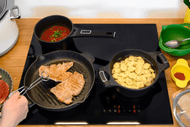
What Is an Induction Stove? A Complete Guide to How It Works, Best Cookware, and Care
2026 May 18th
Curious about what an induction stove is and whether it’s right for your kitchen? Induction cooking has surged in popularity because it is fast, precise, efficient, and safer to use than many traditional options. This guide explains how induction works, which pots perform best, how to clean induction stove top naturally, and practical tips to get the most from your cooktop.
What Is an Induction Stove?
An induction stove uses electromagnetic energy to heat your cookware directly. Unlike gas or traditional electric, the cooktop itself doesn’t generate heat for the air; instead, it energizes the pan, which then heats your food. The surface often stays cooler to the touch (outside of residual heat from the pan), making induction fast, responsive, and easier to keep clean.
How Does an Induction Stove Work?
A coil under the glass creates a high-frequency magnetic field when turned on. When you place compatible cookware on the zone, that field induces tiny electrical currents (eddy currents) in the pan, causing it to heat up. Because the pan is the heat source, you get rapid boil times and fine-grained temperature control.
Key advantages of induction heating
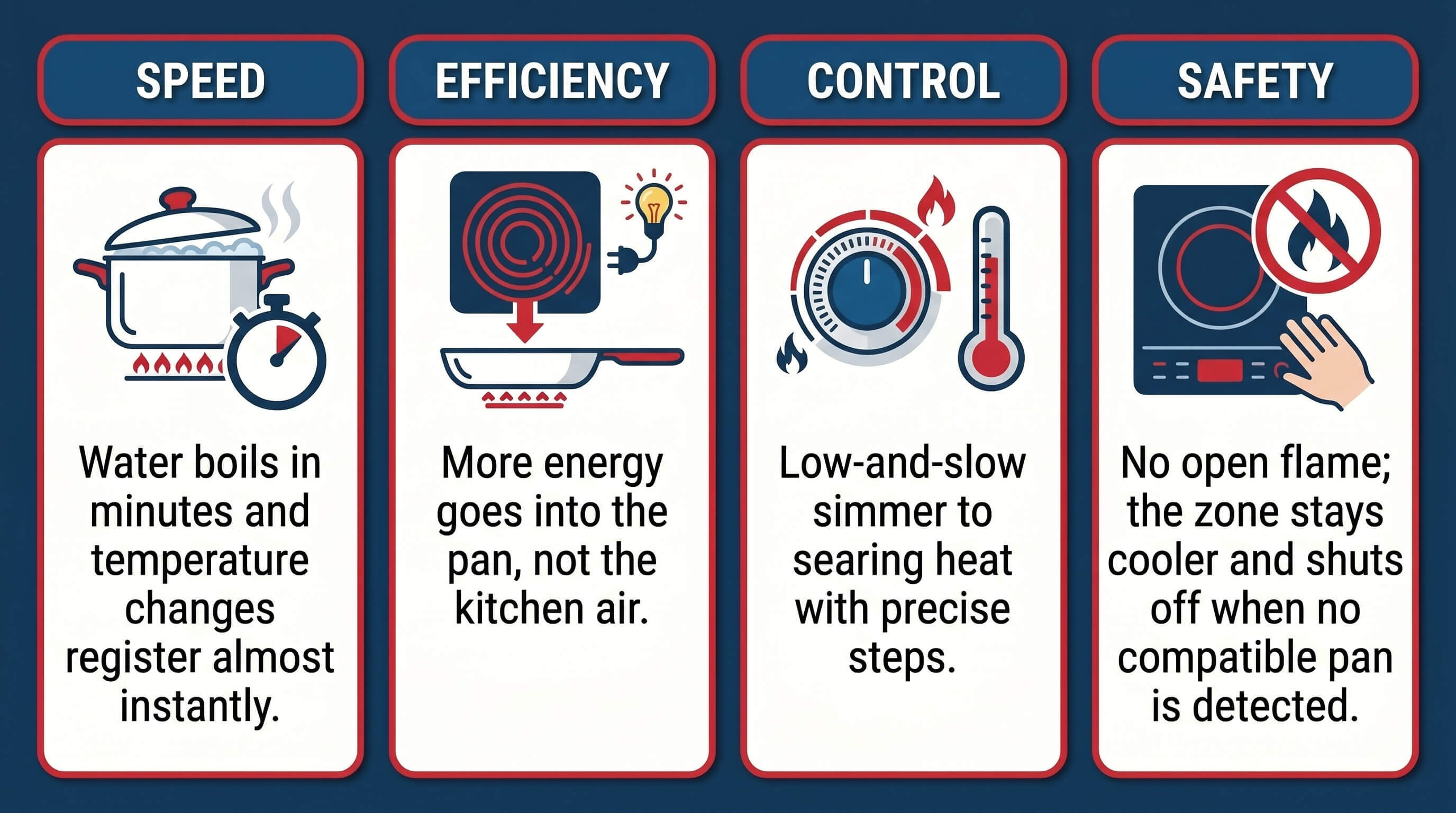
Induction vs. Gas and Electric: What to Expect
Speed and efficiency
Induction rivals or beats gas for speed and is significantly more efficient than both gas and coil or radiant electric. Less ambient heat also keeps your kitchen cooler.
Safety and comfort
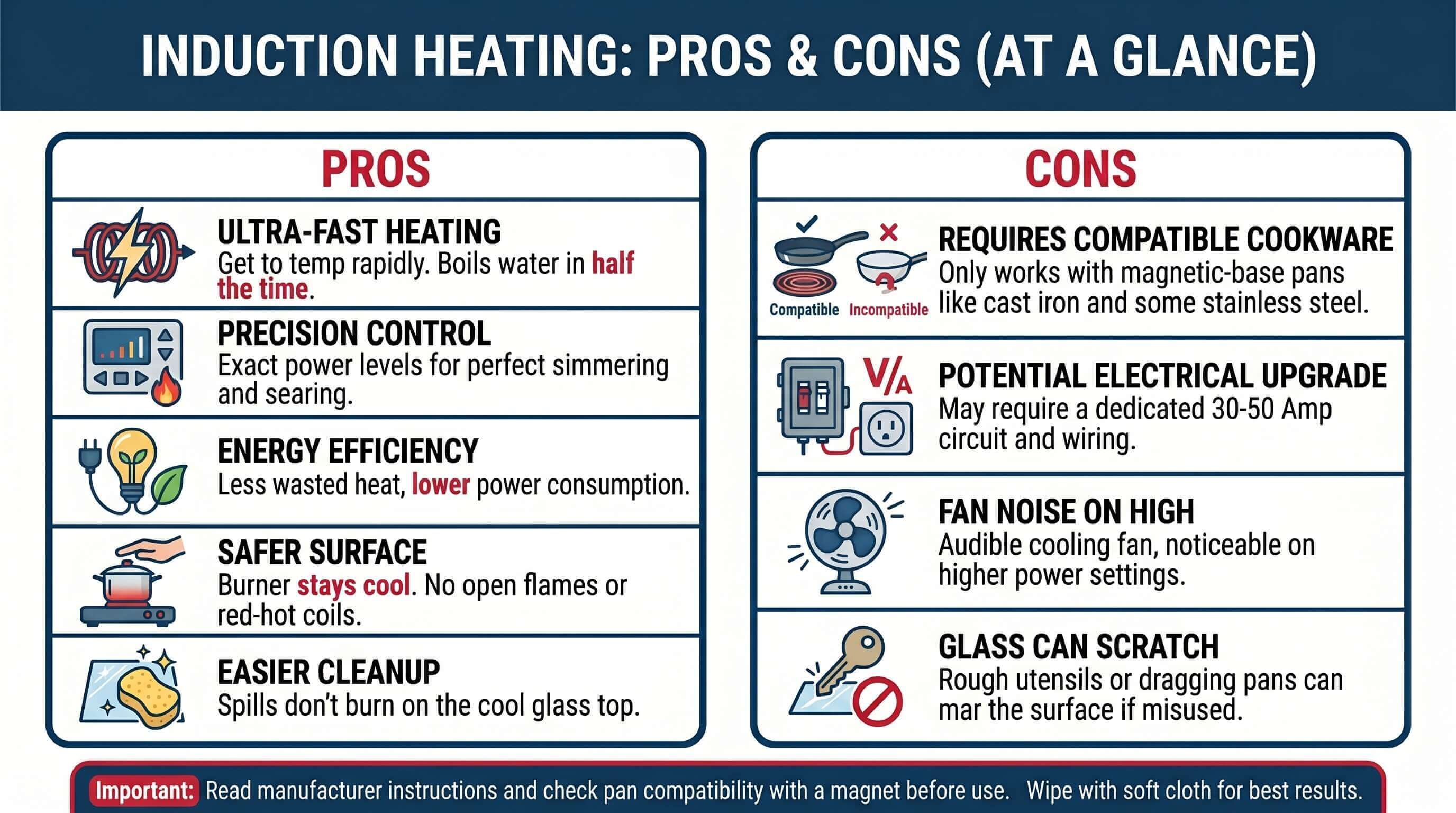
There are no combustion byproducts from an open flame, and child locks, auto shutoff, and pan detection add layers of safety. Noise can include a faint hum or fan, especially on high power, which is normal.
Costs and installation
Upfront prices can be higher and many models require a dedicated 240V circuit. However, energy savings and performance may offset initial costs over time.
Pots for Induction Stove: What Cookware Works
When people search for pots for induction stove cooking, the rule is simple: the base must be magnetic. You can test yours with a fridge magnet; if it sticks firmly, it likely works on induction.
Best materials
- Stainless steel (magnetic grades): Look for “induction-ready” or try the magnet test.
- Cast iron: Excellent heat retention and searing power.
- Enameled cast iron: Works like cast iron with an easy-clean coating.
- Carbon steel: Lightweight alternative to cast iron; great for high-heat tasks.
Materials that may not work
- Aluminum, copper, and glass: Only compatible if they have a bonded magnetic base.
- Very thin or warped pans: Can reduce efficiency or fail to trigger the sensor.
Everyday Use Tips for Better Results
- Match pan and zone size: Keep the pan centered for consistent heating.
- Start lower, then adjust: Induction is powerful; ease into high heat.
- Use boost sparingly: Great for boiling, but not ideal for delicate sauces.
- Keep the surface dry: Moisture can trigger safety sensors or cause beeping.
- Avoid paper or foil between pan and glass: These can overheat and scorch.
How to Clean an Induction Stove Top Naturally
It’s easy to keep the surface looking new without harsh chemicals and just with simple pantry items.
Step-by-step natural cleaning
- Cool completely: Always wait until the glass is cool to the touch.
- Wipe crumbs: Use a dry microfiber cloth to remove loose debris.
- Vinegar spritz: Spray a 1:1 mix of white vinegar and water; wipe to cut grease and streaks.
- Baking soda paste: For stuck-on spots, apply a paste (baking soda + a little water).
- Warm towel rest: Lay a warm, damp towel over the paste for 10–15 minutes.
- Gentle scrub and wipe: Use a soft cloth to lift residue; then buff dry with microfiber.
- Metal marks: Rub gently with baking soda or a melamine sponge; rinse and dry.
- Avoid abrasives: Skip steel wool and harsh powders that can scratch the glass.
Buying Guide: Features That Matter
Performance and control
- Power and element size: Look for a good range of zone sizes and a high max wattage.
- Bridging zones: Useful for griddles or oval pans.
- Temperature management: Fine increments, simmer settings, and automatic boil-then-hold are helpful.
Convenience and safety
- Touch controls and timers: Precise, independent zone timers are ideal.
- Pan detection and auto shutoff: Save energy and add safety.
- Keep-warm and melt functions: Prevent scorching delicate foods.
FAQ: Induction Stove Basics
Does cast iron work on induction stove?
Yes. Cast iron is induction-compatible and great for searing and heat retention. Keep the base smooth and avoid sliding to protect the glass.
What pots for induction stove are best?
Magnetic stainless steel, cast iron, enameled cast iron, and carbon steel. Non-magnetic aluminum or copper can work only if they include a bonded magnetic base.
Can I use nonstick pans on induction?
Yes, if they have a magnetic base. Many modern nonstick pans are labeled “induction-ready.”
Do induction stoves require special power?
Many full-size units need a dedicated 240V circuit. Portable single-burner units typically run on standard outlets.
Is induction safe for people with pacemakers?
Induction complies with safety standards, but individuals with implanted medical devices should consult their physician and follow the device maker’s guidance.
Why does my cooktop hum or click?
A gentle hum or fan noise on high settings is normal. Clicking may occur during power cycling or when the cooktop detects the pan.
Can induction scratch easily?
The glass is durable but can scratch. Use flat-bottom pans, keep the surface clean, and lift rather than slide heavy cookware.
