


What Is a Convection Oven? How It Works, When to Use It, and Cooking Tips
2026 Sep 22nd
What is a convection oven, and why do many cooks prefer it for roasting, baking, and reheating food? A convection oven is an oven equipped with a fan and exhaust system that circulate hot air around the cooking chamber. This steady airflow distributes heat more evenly than a traditional oven, often helping food cook faster and brown more consistently.
Convection technology is available in wall ovens, ranges, countertop ovens, toaster ovens, and air fryers. Although operation varies by model, understanding the basic settings can help you get better results and avoid overcooking meals.
How Does a Convection Oven Work?
To understand how a convection oven works, consider what happens inside a conventional oven. Heating elements warm the air, but that air remains relatively still. Hot and cool areas can develop, especially when multiple pans block heat circulation.
A convection oven uses a built-in fan to move heated air around the food. An exhaust system also helps release excess moisture. The circulating air reduces temperature differences inside the oven and transfers heat more efficiently across the food's surface.
Standard Convection vs. True Convection
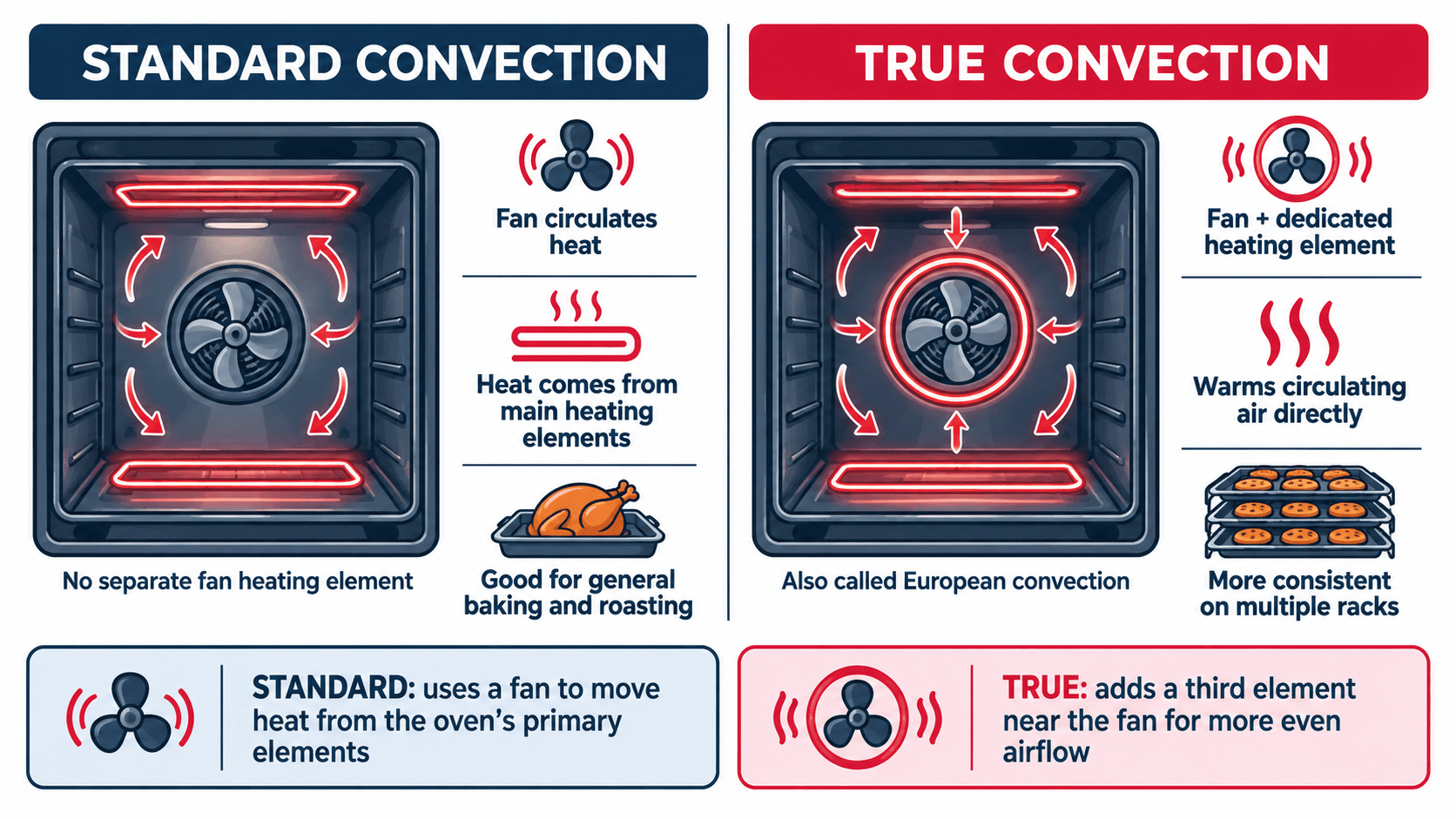
Standard convection ovens use a fan to circulate heat produced by the primary heating elements. True convection, sometimes called European convection, adds a heating element near or around the fan. This third element warms the circulating air directly and may provide more consistent results when cooking on multiple racks.
Is an Air Fryer a Convection Oven?
An air fryer is essentially a compact, high-powered convection appliance. Its small chamber and strong airflow promote rapid cooking and crisp surfaces. A full-size convection oven works on the same general principle but can accommodate larger portions and multiple pans.
Convection Oven vs Conventional Oven
The main difference between a convection oven and a conventional oven is airflow. A conventional oven relies primarily on radiant heat from its elements and natural movement of hot air. A convection oven actively circulates that air with a fan.
- Cooking speed: Convection can cook many foods more quickly.
- Browning: Moving air encourages caramelization and crisping.
- Heat distribution: Convection reduces hot spots and supports multi-rack cooking.
- Moisture: The exhaust system creates a drier environment, which benefits roasted and crispy foods.
- Recipe compatibility: Conventional heat may be better for delicate baked goods that need a gentle, stable rise.
Many modern ovens offer both conventional and convection modes, so you can choose the setting that best matches the recipe.
When to Use Convection Bake
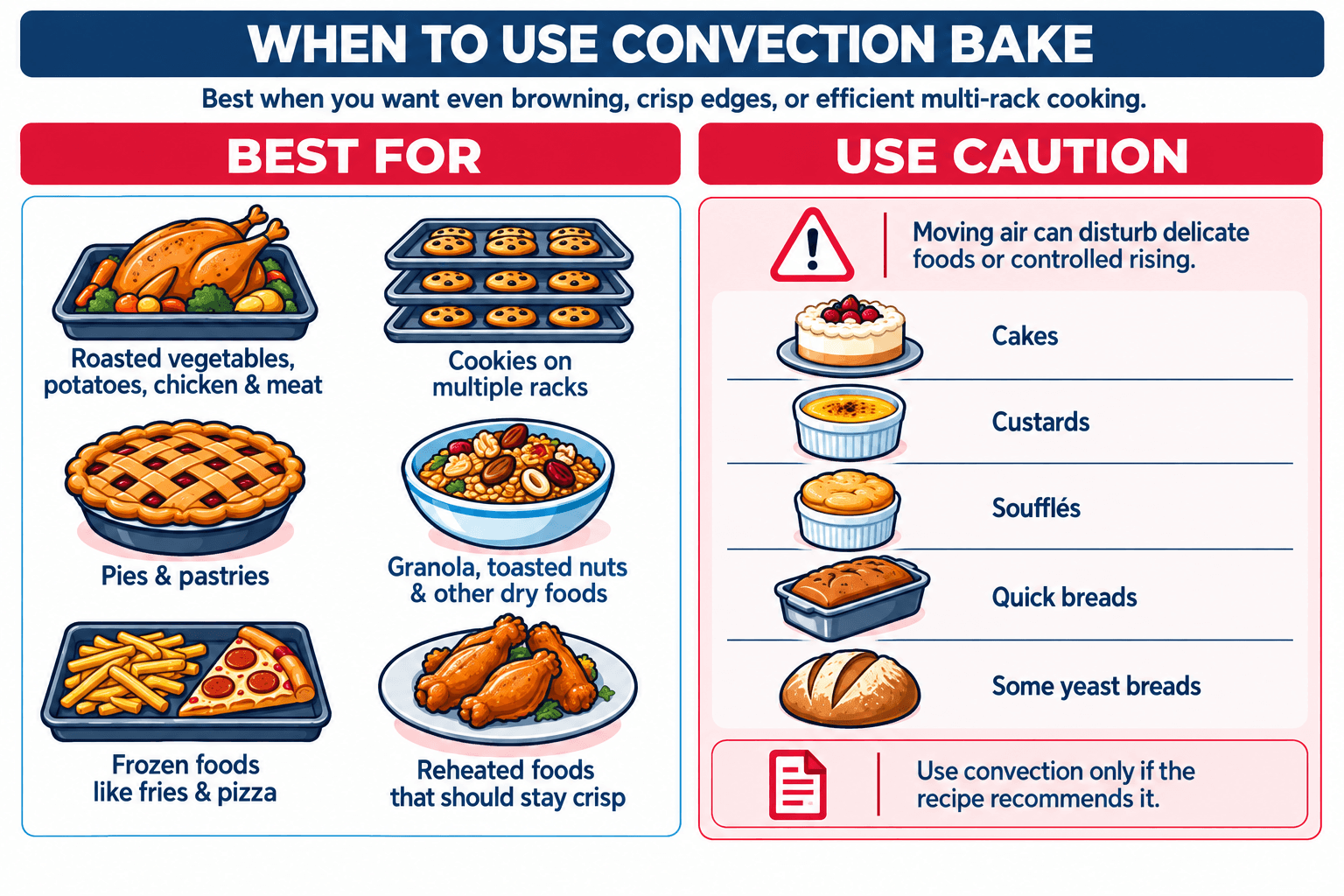
Convection is particularly useful when you want even browning, crisp edges, or efficient multi-rack cooking.
Foods That Benefit From Convection
- Roasted vegetables, potatoes, chicken, and meat
- Cookies baked on more than one rack
- Pies and pastries that benefit from browning
- Granola, toasted nuts, and other dry foods
- Frozen foods such as fries and pizza
- Reheated foods that should remain crisp
Air circulation can help render fat and dry the exterior of meat, producing browned skin or a more developed crust. It also allows heat to move around separate trays, although pans should not be overcrowded.
When Conventional Bake May Be Better
Use caution with delicate foods that can be disturbed by moving air or that depend on controlled rising. Cakes, custards, soufflés, quick breads, and some yeast breads may perform better on a conventional setting unless the recipe specifically recommends convection.
Light parchment paper or foil can also move in the airflow. Secure it with food or use cookware recommended by the appliance manufacturer.
Convection Oven Cooking Times and Temperature Adjustments
Convection oven cooking times are often shorter because moving air transfers heat efficiently. A common guideline is to reduce the recipe temperature by 25 degrees Fahrenheit while keeping approximately the same cooking time. Alternatively, maintain the listed temperature and begin checking the food about 20 to 25 percent earlier.
These are starting points rather than universal rules. Dense casseroles may show little difference, while cookies, vegetables, and smaller cuts of meat can finish noticeably sooner. Some ovens automatically adjust the displayed temperature when convection mode is selected, so review the appliance manual before making your own conversion.
Tips for Reliable Results
- Use shallow pans so air can reach more of the food.
- Leave space between pans and oven walls.
- Avoid overcrowding trays, which traps steam.
- Check doneness early during your first attempt with a recipe.
- Use a food thermometer for poultry, meat, and casseroles.
- Record successful temperature and timing adjustments.
Do You Need to Preheat a Convection Oven?
In most cases, yes. Preheating gives baked goods, roasted foods, and frozen items a predictable starting temperature. Placing food in a cold oven can alter cooking time, texture, spread, and browning.
Some dishes, including long-cooking casseroles, may not require precise preheating, while certain countertop appliances are designed to heat very quickly. Follow the recipe and manufacturer’s instructions. Do not assume that the fan eliminates preheating; it circulates heat but does not instantly bring the oven to the selected temperature.
Frequently Asked Questions
What is the main benefit of a convection oven?
The primary benefit is more even heat distribution. The fan can also shorten cooking time and improve browning, especially for roasted foods and items cooked on multiple racks.
Can you use regular recipes in a convection oven?
Yes. Reduce the temperature by about 25 degrees Fahrenheit or check the dish earlier than the recipe suggests. Monitor it closely until you know how your oven performs.
Can you put aluminum foil in a convection oven?
Foil is generally oven-safe, but it should be secured so the fan cannot move it. Never cover vents or line the oven floor unless the manufacturer explicitly permits it.
Does convection dry out food?
It can dry exposed surfaces more quickly, which helps crisp and browning. However, food may become dry if it cooks too long, so reduce the temperature or cooking time as needed.
Is convection baking better for everything?
No. Convection excels at roasting, crisping, and multi-rack baking, while conventional heat can be more suitable for delicate cakes, custards, and recipes that require a gentle rise.
