


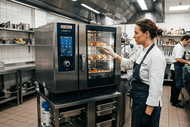
Rational Oven Guide: How They Work, Key Settings, Cleaning, Costs, and Troubleshooting
2026 Mar 27th
A Rational oven is a cornerstone in many modern professional kitchens. By combining convection heat, steam, and intelligent controls, it helps teams deliver consistent results, reduce manual work, and improve food quality across a wide range of menu items.
This guide explains how to use a Rational oven, the most important settings to understand, cost considerations, essential cleaning and maintenance steps, and practical troubleshooting tips for busy kitchens.
What Is a Rational Oven?
A Rational oven is a combi oven designed to combine dry heat and steam in a single cooking chamber. This allows chefs to cook more precisely, retain moisture when needed, and switch easily between techniques such as roasting, steaming, baking, grilling, and reheating.
Many Rational ovens also include guided cooking programs, programmable recipes, and core temperature probes that help automate cooking processes and reduce the need for constant manual supervision.
Key Benefits and Use Cases
One of the main reasons professional kitchens invest in Rational ovens is their versatility. Instead of relying on multiple pieces of equipment, a single unit can often handle a wide variety of cooking tasks.
- Multi-function versatility: A Rational oven can bake, roast, grill, steam, poach, retherm, and slow cook in one machine.
- Consistent results: Precise control over temperature, humidity, and airflow makes it easier to repeat the same result across shifts and team members.
- Labor and energy savings: Automated programs, reduced monitoring, and efficient cooking cycles can help lower labor demands and improve kitchen efficiency.
- Better menu flexibility: From batch cooking to à la carte service, Rational ovens make it easier to produce a broader menu with reliable quality.
Understanding Rational Oven Cost
Rational ovens come in a range of sizes and configurations, including different pan capacities and fuel types such as electric and gas. Rational oven cost depends on factors like size, features, accessories, water treatment requirements, and installation complexity.
As a general guide:
- Smaller units often fall into the lower five figures when purchased new
- Mid-size units are typically in the mid-to-upper five figures
- Larger units with higher capacity and more advanced infrastructure needs can cost significantly more
When budgeting, it is important to look beyond the oven itself. Total investment may also include water filtration or treatment systems, ventilation upgrades, delivery and installation, cleaning chemicals, staff training, service plans, and replacement parts and accessories.
Used or refurbished Rational ovens can be a strong value option, but they should always be inspected carefully. Pay particular attention to the steam system, seals, probe condition, and parts availability before purchase.
How to Use a Rational Oven
If you want to use a Rational oven efficiently during service, it helps to follow a simple and repeatable workflow.
1. Preheat and Load Correctly
Start by preheating the oven to the appropriate cooking mode and temperature. Choose the correct trays or pans for the product you are preparing. For example, perforated pans work well for steaming, while solid pans are better for roasting or collecting juices.
Avoid overcrowding the oven. Proper airflow is essential for even cooking, browning, and moisture control.
2. Choose a Cooking Program or Manual Mode
Many Rational ovens offer guided cooking programs that simplify the preparation of common foods such as poultry, vegetables, baked goods, and rethermed items. These programs are especially useful for maintaining consistency across staff members.
In manual mode, you can control the key variables yourself, including temperature, humidity, and fan speed. For proteins and other sensitive items, using the core temperature probe is one of the best ways to ensure precise doneness and food safety.
3. Monitor, Adjust, and Save Successful Settings
During cooking, pay attention to both the product and the oven settings. If you need more browning, reduce humidity or finish with dry heat. If a product is losing moisture too quickly, increase humidity or lower the cooking intensity.
Once you find settings that work well, save them as custom programs. This helps standardize output, speeds up training, and improves consistency over time.
Essential Rational Oven Settings
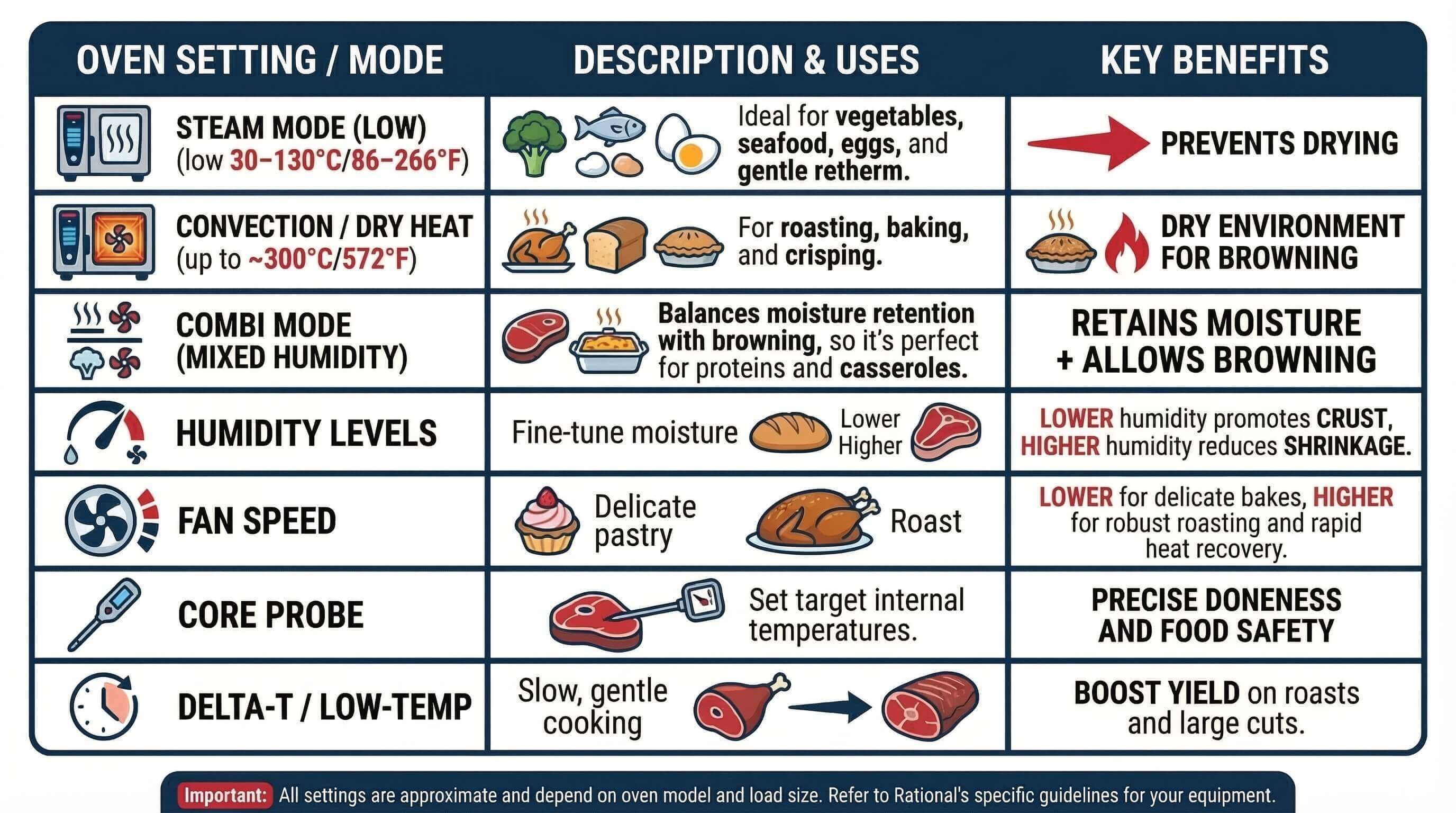
Understanding Rational oven settings is the key to getting the best performance from the equipment.
Steam Mode
Steam mode is ideal for delicate foods and products that benefit from gentle heat and moisture. It works well for vegetables, seafood, eggs, and reheating prepared items without drying them out.
Convection or Dry Heat
Dry heat is best for roasting, baking, crisping, and finishing products that need color or texture. It supports stronger browning and helps create crusts and crispy finishes.
Combi Mode
Combi mode uses a balance of dry heat and steam. This is one of the most useful settings in day-to-day kitchen operations because it supports both moisture retention and browning. It is especially effective for proteins, casseroles, and batch cooking.
Humidity Control
Humidity affects both texture and yield. Higher humidity levels can reduce shrinkage and help preserve moisture, while lower humidity encourages crust formation and stronger browning.
Fan Speed
Fan speed influences airflow and cooking intensity. Lower fan speeds are often better for delicate products such as pastries or soft baked items. Higher fan speeds support roasting, faster heat recovery, and stronger circulation around dense loads.
Core Temperature Probe
The core probe is essential for accurate cooking, especially with meat, poultry, and other proteins. Rather than relying only on time, the oven can cook until the product reaches the target internal temperature.
Low-Temperature or Delta-T Cooking
Gentle cooking modes are useful for roasts and large cuts where yield, tenderness, and consistency matter. Slower cooking can reduce moisture loss and improve final quality.
Cleaning and Maintenance
Consistent cleaning is one of the most important parts of keeping a Rational oven working properly. It protects food quality, improves reliability, and helps extend the lifespan of critical components.
How to Clean a Rational Oven
Many Rational ovens include automated cleaning programs, which make regular maintenance much easier. Even so, staff should follow a routine that includes daily, weekly, and periodic checks.
Daily or After Heavy Use
At the end of the day or after heavy production, allow the cavity to cool if needed and follow the on-screen cleaning instructions. Use only approved cleaning and care products designed for the oven, as these help protect internal materials and support effective scale and grease removal.
Door glass, gaskets, and the drip area should also be wiped down. Racks, trays, and accessories should be removed and cleaned separately.
Weekly
Inspect the door gasket, drain area, wash components, and core probe for residue or buildup. Clear away grease, food debris, and any visible mineral deposits before they become larger problems.
Monthly or Quarterly
Depending on water hardness and production volume, descaling may need to be performed regularly. Kitchens with high mineral content in the water supply are especially vulnerable to scale-related issues.
It is also wise to schedule periodic service checks to inspect steam-generation components, seals, ventilation pathways, and sensors.
Using the correct chemicals and approved procedures helps protect stainless steel surfaces, seals, and other high-value Rational oven parts over time.
Troubleshooting and Quick Fixes
Even well-maintained ovens can occasionally run into problems. Many common issues can be solved quickly with a few practical checks.
How to Reset a Rational Oven
If the oven becomes unresponsive or behaves unexpectedly, start with a soft reset. Exit any active program, use the proper shutdown function, and power the unit off. After a brief pause, power it back on.
Some ovens may also offer user-level reset options in the settings menu. Avoid factory resets unless you are following official guidance, since they may remove saved programs or require administrative access.
If the problem continues, refer to the user manual or contact authorized service support.
How to Turn Off a Rational Oven
To shut down a Rational oven safely, use the built-in on-screen shutdown control or the designated power-off procedure for your unit. Wait until the system confirms shutdown before switching off the main power supply, if your site procedures require that step.
Avoid cutting the power abruptly during cooking or cleaning cycles unless there is an emergency, since this can interrupt the process and potentially cause errors or maintenance issues.
Common Symptoms and Tips
- Uneven browning: Check whether the oven is overloaded, whether airflow is blocked, or whether humidity is set too high. A longer preheat and better spacing between pans can also help.
- Excess moisture: If products are coming out too wet or not developing enough color, reduce humidity or finish with dry heat to release more moisture from the cavity.
- Probe errors: Probe issues may be caused by buildup, damaged tips, or cable wear. Clean the probe carefully and inspect it for visible damage.
- Frequent scaling alerts: Repeated scale warnings usually point to water treatment problems or insufficient cleaning frequency. Check filters, review water hardness, and adjust maintenance schedules accordingly.
Rational Oven Parts and Accessories That Matter
Some components play a major role in performance, consistency, and uptime. Keeping an eye on wear items can prevent unnecessary downtime.
Important parts and accessories include:
- Core temperature probes
- Door gaskets
- Hinges and seals
- Trays, racks, grids, and baskets
- Spray or wash components for automated cleaning
- Water filtration and descaling systems
- Approved detergents and care products
Having essential high-wear parts and cleaning supplies available on-site can help kitchens respond faster when maintenance needs arise.
Buying Tips and ROI
A Rational oven is a significant investment, so it is important to evaluate both upfront cost and long-term return.
- Match the oven to peak demand: Choose a size that supports your busiest 30 to 60 minutes of service, not just your average day.
- Invest in water treatment: Good filtration helps prevent scaling, improves steam performance, and reduces service costs over time.
- Train the team properly: The more your staff understands settings, loading, probe use, and saved programs, the more value you will get from the oven.
- Track real performance gains: Measure labor savings, reduced waste, improved yields, and cooking speed to understand the true return on your investment.
FAQ
What is the average Rational oven cost?
Cost depends on size, fuel type, features, installation, and accessories. Smaller units usually sit in the lower five figures when new, while larger and higher-capacity units can cost much more. Water treatment, detergents, service, and training should also be included in the total budget.
Which Rational oven settings are best for crispy skin?
Dry heat or combi mode with lower humidity toward the end of cooking usually works best. A preheated cavity and moderate-to-high fan speed can also improve crisping.
How often should I clean a Rational oven?
A cleaning cycle should generally be run daily or after heavy use. Spills should be wiped promptly, gaskets should be checked weekly, and descaling should follow water conditions and usage levels.
Can I use third-party cleaners?
It is best to use manufacturer-approved cleaners. These are designed to protect the oven’s internal materials, seals, and sensors, and they may also be important for warranty compliance.
How do I reset a Rational oven if it freezes?
Start with a soft reset by shutting the unit down properly and restarting it. If the issue continues, check the manual or contact authorized service rather than attempting deeper resets without guidance.
How do I turn off a Rational oven safely?
Use the proper shutdown function on the control panel, wait for confirmation, and only then switch off main power if required by your kitchen procedures.
What Rational oven parts are worth keeping on hand?
Commonly stocked items include door gaskets, probe assemblies, racks, approved cleaning products, and water filter cartridges.
How do I use a Rational oven for batch cooking?
Use standardized recipes, core temperature probes, and saved cooking programs. Load the oven in a way that preserves airflow, and use a dry finishing phase when crisp texture is needed.
Final Thoughts
With the right setup, a clear understanding of key settings, and a consistent cleaning routine, a Rational oven can become one of the most valuable tools in a professional kitchen. It supports better consistency, lower labor demands, improved yields, and stronger menu execution, making it a smart long-term investment for many foodservice operations.
