 PAY IN 4 WITH SEZZLE



KitchenAid Artisan vs Classic: Which Stand Mixer Should You Buy?
2026 Oct 28th
The KitchenAid Artisan and Classic look almost identical on the counter. Both share the brand’s familiar tilt-head design, 10-speed control and front attachment hub. The differences are in bowl size, motor power, what comes in the box, colour choice and price, and those details decide which mixer suits the way you bake.
This KitchenAid mixer comparison puts the specs side by side, explains who each model suits, and covers when to look beyond both: to the compact Artisan Mini, or to a commercial 8-quart bowl-lift built for heavy dough. You’ll also find attachment compatibility notes and buying tips to help you choose the best stand mixer for your kitchen.
KitchenAid Artisan vs Classic at a Glance
Here’s how the two tilt-head models compare. Included accessories and colours can vary by model number and retailer, so always confirm the details on the product listing.
| Spec | KitchenAid Classic | KitchenAid Artisan | What It Means for You |
|---|---|---|---|
| Bowl capacity | 4.3 L (4.5 qt) stainless steel bowl, no handle. Rated for up to 8 cups of flour. | 4.7 L (5 qt) stainless steel bowl with handle. Rated for up to 9 cups of flour. | More room for doubled recipes, plus a handle for easier lifting, pouring and scraping. |
| Motor | 275 watts | 325 watts | The Artisan has more headroom for thick cookie dough and frequent use. |
| Speeds | 10 | 10 | A tie. Both go from a slow stir to a fast whip. |
| Design and hub | Tilt-head, metal construction, front attachment hub | Same | Same build quality and the same attachment options. |
| Footprint (H × W × D) | 35.3 × 22.1 × 35.8 cm (13.9 × 8.7 × 14.1 in) | Same | Identical counter space. If space is your main concern, look at the Artisan Mini. |
| Weight (boxed) | About 11 kg (24–25 lb) | About 12 kg (26 lb) | Both are heavy enough to stay put while kneading. If yours will live in a cupboard, the Mini is lighter to lift. |
| Colours | A few neutral finishes, such as white and onyx black | More than 20 colours, including bold, pastel and matte finishes | The Artisan, if your mixer will sit on display. |
| What’s in the box | Coated flat beater, coated dough hook, 6-wire whip | Coated flat beater, coated dough hook, 6-wire whip, one-piece pouring shield | The pouring shield keeps flour and splatter in the bowl. Bundles vary, so check the listing. |
| Price | Lower | Higher | The Classic if budget leads. The Artisan if you’ll use the extra capacity and power. |
In short, the Classic is a practical, budget-friendly choice for casual bakers. The Artisan adds capacity, power, convenience and colour choice, which makes it the more flexible mixer for frequent use.
Capacity and KitchenAid Mixer Sizes
Bowl capacity is the most noticeable difference. The Classic has a 4.3-litre (4.5-quart) stainless steel bowl, while the Artisan’s holds 4.7 litres (5 quarts). Half a quart sounds minor, but it gives ingredients more room to move and makes doubling a recipe far more comfortable.
Who Should Choose the Classic Bowl?
The Classic’s bowl handles everyday cakes, frosting, mashed potatoes and standard batches of cookies without fuss. One thing it won’t do is save counter space: both mixers share the same footprint. If space is your main concern, the Artisan Mini (covered below) is the model to look at.
Who Benefits From the Artisan Bowl?
The Artisan suits families, frequent bakers and anyone who regularly doubles recipes. KitchenAid rates its bowl for up to nine dozen cookies in a single batch, and the handle makes lifting, pouring batter and scraping down the sides easier. Among common KitchenAid mixer sizes, five quarts strikes a useful balance between a manageable machine and generous capacity.
Motor Power and Mixing Performance
The Classic runs on a 275-watt motor, while the Artisan steps up to 325 watts. Wattage doesn’t tell the whole story (KitchenAid rates its 250-watt Artisan Mini as just as powerful as the Classic), but the Artisan’s extra power helps it work through thick cookie dough and other dense mixtures with less strain.
Both machines whip cream, beat cake batter and mix soft doughs well. The Classic is ample for occasional baking, and the Artisan is better equipped for frequent or moderately demanding recipes. Neither is built to knead heavy bread dough week after week the way a bowl-lift model is.
Who Each Model Suits
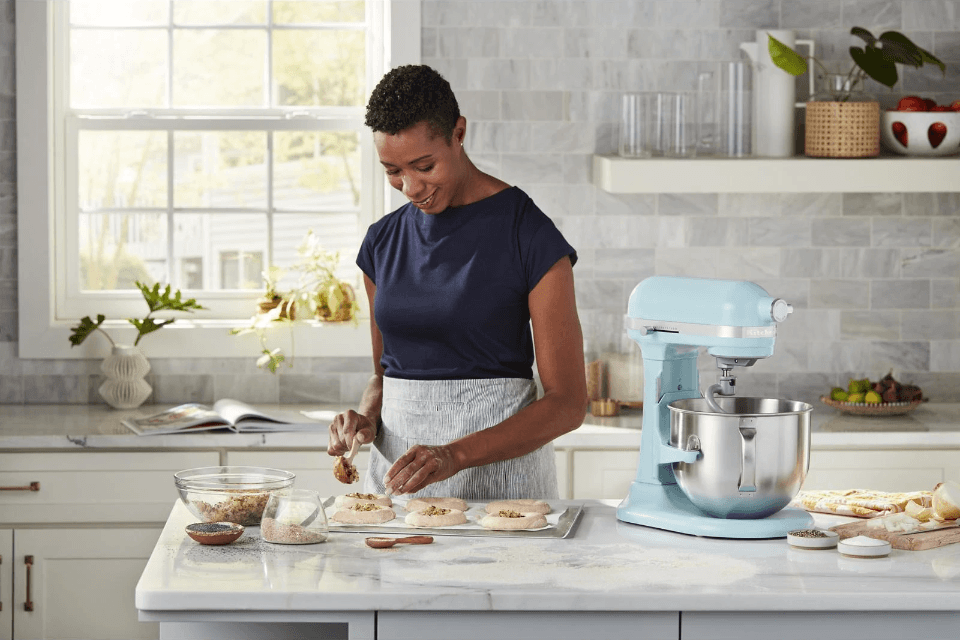
The Occasional Baker: KitchenAid Classic
You bake for birthdays, holidays and the odd weekend batch of cookies. Your recipes are standard-size and mostly light: cakes, frosting, whipped cream and quick breads. The Classic gives you the core KitchenAid experience, with the same 10 speeds and the same attachment hub as the Artisan, at a lower price. Put the savings toward a pasta roller or food grinder attachment instead.
The Regular Baker: KitchenAid Artisan
You bake most weeks, double recipes for gatherings, and move between cookie dough, cake batter and the occasional loaf of bread. The larger bowl, stronger motor and handled bowl earn their keep with every batch, and the Artisan handles bread dough comfortably in moderate quantities.
The Weekly Bread Baker: Consider a Bowl-Lift
If you knead bread, bagel or pizza dough every week, stiff dough puts a real load on any tilt-head mixer. Both the Classic and Artisan can knead bread dough, but a bowl-lift model supports the bowl on a sturdy lift and keeps it stable under heavy, repeated loads. If that sounds like your kitchen, read on for the bowl-lift comparison and the commercial 8-quart.
KitchenAid Bowl Lift vs Tilt Head

Both the Artisan and Classic use a tilt-head mechanism. The head tilts back to give you open access to the bowl and makes swapping beaters quick. It’s intuitive, but you need enough clearance above the mixer to raise the head, so measure the space under your upper cabinets before you buy.
In the KitchenAid bowl lift vs tilt head comparison, bowl-lift mixers use a lever to raise the bowl up to a fixed mixing head. This keeps the bowl stable when mixing heavy ingredients or large batches, which is why bowl-lift models are the usual choice for serious bread bakers. The trade-off is that they’re typically larger, heavier and more expensive. Tilt-head models are easier to use for small recipes and fit more comfortably in the average home kitchen.
KitchenAid Artisan vs Professional
Professional and other bowl-lift models, such as the 7-quart bowl-lift, offer larger bowls and more stability for high-volume baking and dense mixtures. They also take up more space and usually cost more.
The Artisan remains a strong middle-ground option: more capacity than the Classic without the weight and footprint of a full-size bowl-lift. Serious bread makers and batch bakers may prefer a bowl-lift, but most households will find the Artisan easier to live with.
Beyond Artisan vs Classic: The Artisan Mini and the Commercial 8-Quart
KitchenAid Artisan Mini: For Small Kitchens and Small Batches
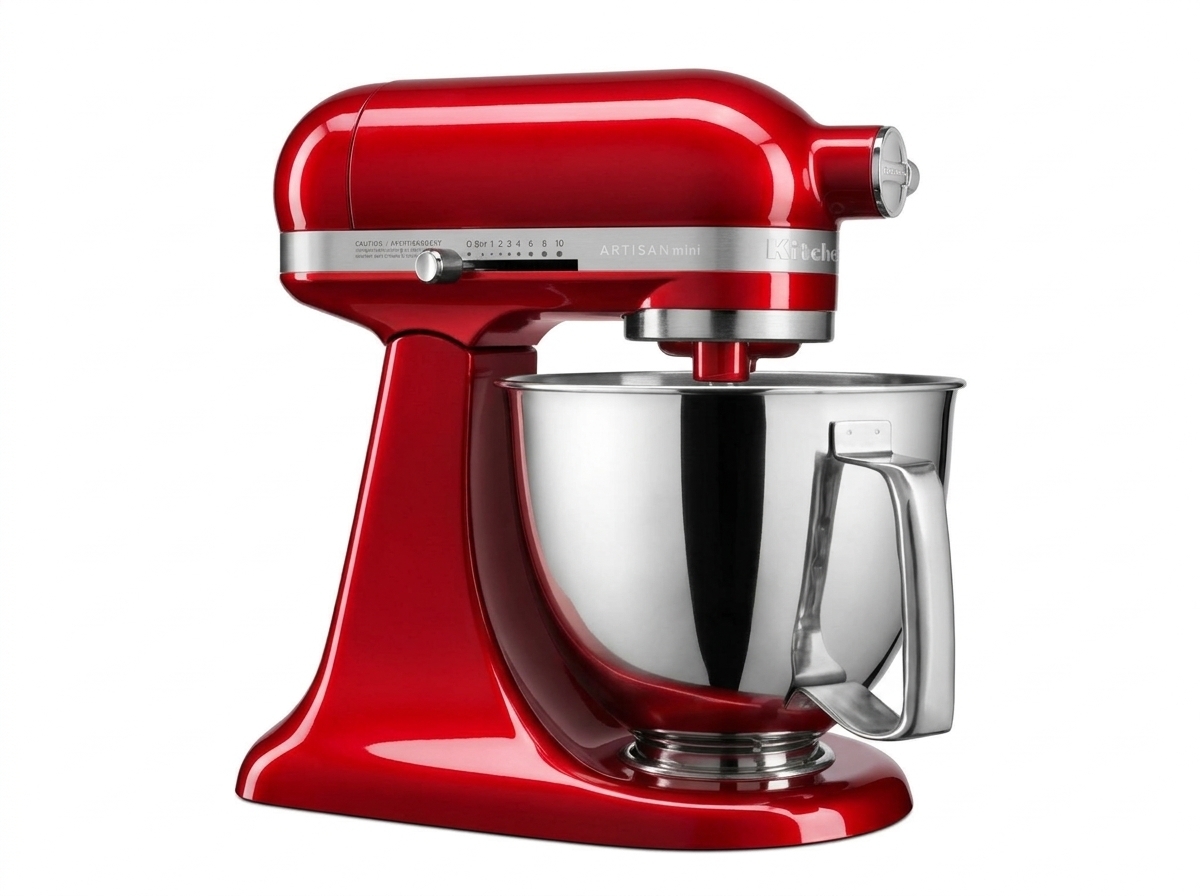
If counter or cupboard space is tight, the Artisan Mini is worth a look. It has a 3.3-litre (3.5-quart) bowl and a 250-watt motor, and it’s roughly 20% smaller and 25% lighter than KitchenAid’s full-size tilt-head mixers, while KitchenAid rates it as just as powerful as the Classic. It keeps the 10 speeds, the tilt-head design and the same front attachment hub.
The Mini is a good fit for apartments, smaller households and bakers who mostly make single batches, with KitchenAid rating the bowl for up to five dozen cookies at a time. It comes with a flex edge beater, which scrapes the sides of the bowl as it mixes, plus a coated dough hook and a 6-wire whip. If you regularly double recipes or bake bread, the Artisan’s larger bowl is the better long-term choice.
KitchenAid Commercial 8-Quart: For Heavy Doughs and Big Batches

At the other end of the range, KitchenAid’s NSF-certified Commercial Series 8-quart bowl-lift mixer is built for volume. It pairs a 7.6-litre (8-quart) stainless steel bowl with a 1.3 HP high-efficiency DC motor designed to run longer with less heat build-up. That makes it the right tool for stiff bread, bagel and pizza doughs, multiple loaves in one batch, and long mixing sessions. It comes with a stainless steel flat beater, a spiral dough hook and an 11-wire whip.
The commercial 8-quart suits cafés, caterers, small bakeries and home bakers who knead large batches several times a week. For most home kitchens, it’s more machine than you need, and at about 42 cm (16.5 in) tall it needs more clearance than a tilt-head model. Commercial equipment warranties are generally written for business use, so check the terms if you’re buying one for home.
What’s in the Box and Colour Options
Both models typically include a coated flat beater, a coated dough hook and a 6-wire whip. The Artisan adds a one-piece pouring shield, which keeps flour and splatter in the bowl as you add ingredients. Included accessories vary by model number and retailer, and some Artisan bundles add a second bowl or an attachment, so check exactly what’s in the box before you buy.
Colour is the other big difference. The Classic comes in a few neutral finishes, while the Artisan is offered in more than 20 colours, from classic white and black to bold, pastel and matte shades. If your mixer will live on the counter, the Artisan gives you far more ways to match your kitchen.
KitchenAid Attachment Compatibility
Every KitchenAid stand mixer in this guide, from the Classic and Artisan to the Artisan Mini and the commercial bowl-lift, has a front power hub. Hub-powered attachments such as pasta rollers, food grinders, spiralizers and slicer/shredders work across the range, so the less expensive Classic stays just as versatile as the Artisan.
Accessories that work inside the bowl are a different story. Bowls, beaters, dough hooks, whips and pouring shields are designed for a specific mixer type and bowl size:
- Classic and Artisan: Many 5-quart tilt-head bowls also fit 4.5-quart tilt-head models, but confirm against your model number first.
- Artisan Mini: Uses 3.5-quart bowls, beaters and hooks made specifically for the Mini.
- Bowl-lift and commercial models: Use their own bowls and accessories, which aren’t interchangeable with tilt-head mixers.
- Before you buy: Check KitchenAid’s compatibility information for your exact model number rather than relying on bowl size alone.
Price and Overall Value
The Classic is usually the more affordable mixer, which makes it attractive to beginners and occasional bakers. It delivers the core KitchenAid experience without charging extra for a larger bowl, more power or a wide colour range.
The Artisan costs more, but its advantages are practical rather than purely cosmetic. The handled bowl, extra capacity, stronger motor and broader colour selection justify the price for anyone who bakes regularly. Seasonal promotions can narrow the gap between the two, so compare current packages before you decide.
Buying Tips for KitchenAid Stand Mixers
A little planning helps you get the right model, not just the biggest discount.
- Choose your model before the sale starts. Decide between the Classic, Artisan, Mini or a bowl-lift based on how you bake, then compare model numbers rather than headline prices, since bundles with similar names can include different accessories.
- Check what’s in the box. A lower price may come with fewer accessories, while a bundle with a second bowl or an attachment can be better value than buying those pieces separately later.
- Have a second colour in mind. Popular colours can sell out quickly during peak shopping weeks, so a backup choice saves you from missing the deal.
- Measure your space. Check the height under your upper cabinets with a tilt-head raised, and decide where the mixer will live between uses.
- Add the attachment you’ll actually use. If you already know you want fresh pasta or home-ground meat, buying the attachment with the mixer means you’re ready from day one.
- Buying as a gift? Order early. Leave time for delivery before the holidays, or add a mixer to your gift registry. For more ideas, see our guide to the best gifts for bakers.
Which KitchenAid Mixer to Buy?
Choose the KitchenAid Classic If:
- You bake occasionally or mostly make standard-size recipes.
- You want a dependable KitchenAid stand mixer at a lower price.
- You don’t need a handled bowl, a pouring shield or a wide choice of colours.
- You mainly mix cakes, frosting, cookies and other lighter recipes.
Choose the KitchenAid Artisan If:
- You bake most weeks or often make larger batches.
- You want more bowl capacity and motor power.
- A handled bowl and pouring shield are conveniences you’ll use.
- You want a specific colour to complement your kitchen.
For most regular home bakers asking which KitchenAid mixer to buy, the Artisan is the better long-term choice. The Classic is still excellent value when budget matters and recipes are modest. If space is tight, the Artisan Mini delivers the same core features in a smaller frame, and if you knead heavy dough every week, a bowl-lift or the commercial 8-quart is worth the step up.
Ready to choose? Shop the full KitchenAid range at Williams Food Equipment, with free shipping on orders over $99.
Frequently Asked Questions
Is the KitchenAid Artisan better than the Classic?
The Artisan is better for frequent baking because it has a larger bowl, a more powerful motor and added conveniences like a handled bowl and pouring shield. The Classic may be the better purchase for occasional bakers who want to spend less.
Can the Classic and Artisan use the same attachments?
Yes, for hub-powered attachments such as pasta rollers, food grinders and spiralizers, which connect to the front power hub on both mixers. Bowls, beaters and other accessories that work inside the bowl are model-specific, so confirm compatibility before buying.
Can either mixer knead bread dough?
Yes. Both include a dough hook and can knead bread dough in sensible quantities. The Artisan is the better choice for regular use. For weekly bread baking, very stiff doughs or several loaves at once, a bowl-lift model such as the commercial 8-quart is the right tool.
Will a 5-quart bowl fit the KitchenAid Classic?
Many 5-quart tilt-head bowls are designed to fit 4.5-quart tilt-head models as well, but compatibility depends on the specific bowl and your mixer’s model number. Check KitchenAid’s compatibility information rather than relying on capacity alone.
Is the Artisan worth the extra cost?
For regular bakers, yes. You’ll use the extra capacity, handled bowl and stronger motor every week. For infrequent baking, the Classic provides the same basic functionality at a more accessible price.
Is the Artisan Mini as powerful as the Classic?
KitchenAid rates it as just as powerful as the Classic, despite its smaller size and 250-watt motor. The real limit is its 3.3-litre (3.5-quart) bowl, so it’s best suited to smaller batches.
Can I use a commercial KitchenAid mixer at home?
Yes. The commercial 8-quart runs on a standard 120-volt outlet and is a strong choice for heavy, frequent bread baking. Check the warranty terms first, since commercial equipment warranties are generally written for business use, and make sure you have the counter space and overhead clearance for a larger bowl-lift machine.
When is the best time to buy a KitchenAid stand mixer?
Stand mixers are often promoted during seasonal sales such as Black Friday and Boxing Day. Decide on your model first, then watch for a deal on that exact model number and bundle, rather than letting the discount choose the mixer for you.
