 PAY IN 4 WITH SEZZLE


Is Ceramic Cookware Safe? A Practical, Science-Based Guide
2026 Jun 29th
Shoppers often ask a simple question with a surprisingly nuanced answer: is ceramic cookware safe? The short version is yes...when you choose quality products and use them correctly. This guide breaks down how ceramic nonstick compares to stainless steel, what risks to watch for, and how to get the longest, safest life from your pans.
What “Ceramic” Really Means in Cookware
100% Ceramic and Glazed Stoneware
Some pieces are made entirely from clay or a similar mineral blend and fired at high temperatures. These are typically heavier, excellent at heat retention, and often used for baking or low-and-slow stovetop cooking. Safety considerations focus on glaze quality: reputable brands meet strict limits on lead and cadmium, and are labeled for food safety.
Ceramic-Coated Nonstick (Sol-Gel)
Most “ceramic” frying pans are actually metal (often aluminum) coated with a silica-based, PTFE- and PFOA-free nonstick layer created via a sol-gel process. Under normal kitchen conditions and proper use, sol-gel coatings are generally considered safe and do not contain PTFE. The trade-off is that ceramic coatings tend to wear faster than traditional PTFE nonstick.
Is Ceramic Non-Stick Cookware Safe?
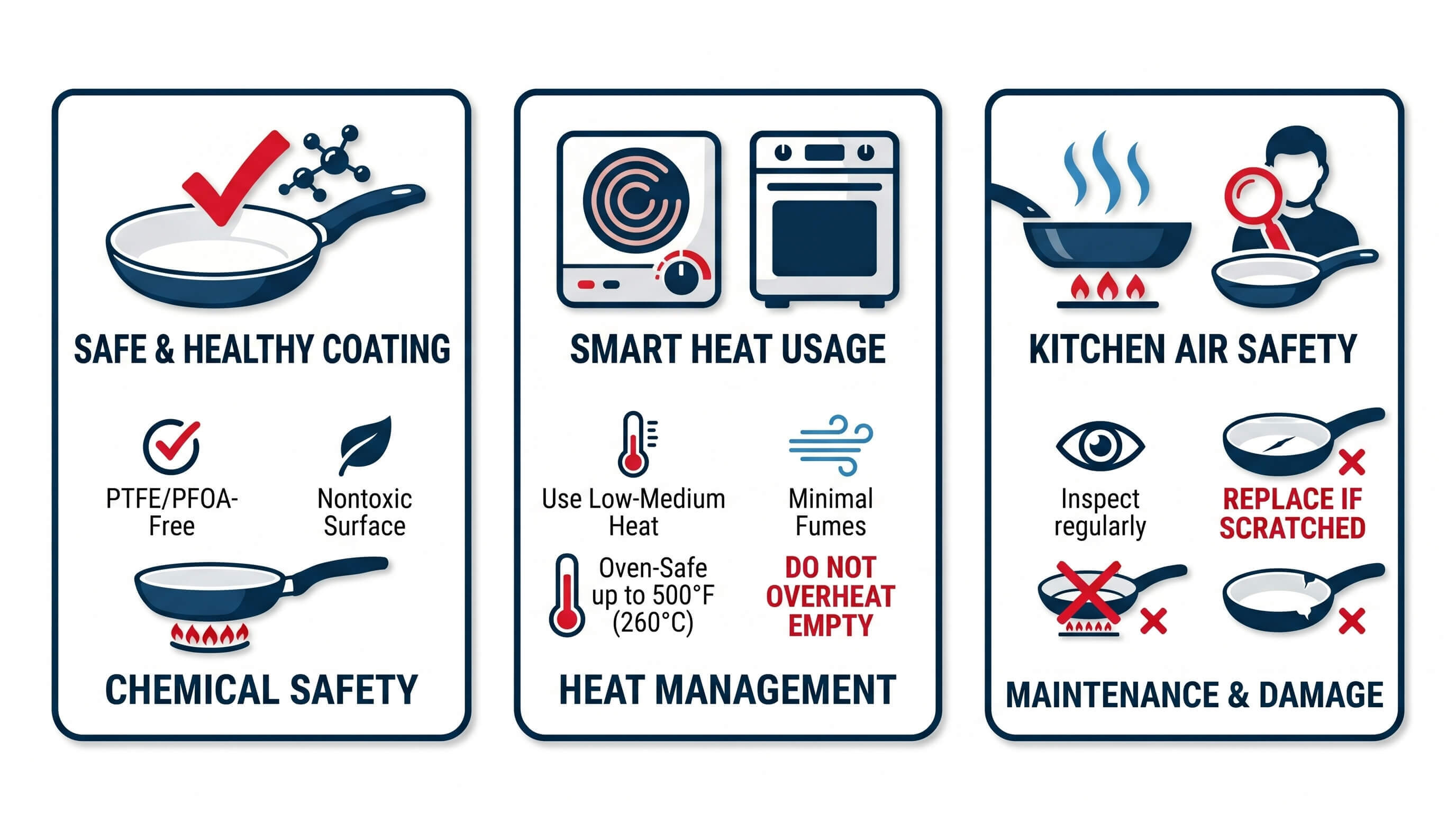
Safety Snapshot
Potential Risks and How to Minimize Them
Heat and Offgassing
While ceramic coatings do not behave like PTFE at high heat, intense temperatures can still degrade the nonstick layer and shorten pan life. Preheat with a small amount of oil over medium heat, avoid searing at maximum settings, and never overheat an empty pan. This preserves performance and safety.
Chipping, Scratching, and Base Metals
If the coating chips deeply, it may expose the underlying metal (often aluminum). Incidental ingestion of tiny coating flakes is considered inert, but a compromised surface can reduce performance and increase sticking. Use wood, nylon, or silicone utensils and non-abrasive sponges. If you see widespread wear, retire the pan.
Lead and Cadmium in Glazes
This concern applies more to fully ceramic or stoneware pieces. Choose cookware that states it meets relevant safety standards (such as FDA compliance, California Proposition 65, or EU LFGB). Reputable brands typically test for heavy metals and label accordingly.
Ceramic Versus Stainless Steel Cookware: Which Is Better?
Performance and Heat Handling
Ceramic-coated pans excel at quick, low-fat cooking of eggs, pancakes, and delicate fish, offering easy release with minimal oil. Stainless steel shines at high-heat searing, browning, and pan sauces. If you prioritize effortless nonstick at moderate heat, ceramic wins; if you want pro-level sear and deglazing, stainless is the workhorse.
Durability and Maintenance
Stainless steel is famously durable, metal-utensil safe, and dishwasher-friendly, though handwashing extends its life. Ceramic coatings provide excellent nonstick out of the box but typically have a shorter lifespan, expect to replace frequently used pans every 1–3 years, depending on care. Avoid aerosol sprays on ceramic; they can create residue that reduces release.
Still unsure on maintenance? Read more tips on how to clean non-stick cookware safely.
Health and Safety Considerations
When comparing ceramic versus stainless steel cookware, both can be safe. Ceramic nonstick is PTFE-free, which appeals to buyers avoiding traditional nonstick polymers. Stainless steel contains alloys of iron, chromium, and often nickel; high-quality stainless is stable for cooking, but those with nickel sensitivities may prefer alternative materials. Either way, use proper heat settings and avoid damaged cookware.
Compatibility and Versatility
- Induction: Stainless steel works if it’s magnetic; many ceramic-coated pans need an induction-ready base.
- Oven: Stainless typically tolerates higher oven temps; check handles/lids for limits on both types.
- Acidic foods: Stainless handles acids well for pan sauces; ceramic is fine at moderate heat, but avoid long, high-heat acidic reductions on fragile coatings.
Buying Tips and Certifications
- Look for clear labeling such as PTFE- and PFOA-free for ceramic coatings.
- For fully ceramic/glazed items, seek statements about lead- and cadmium-free compliance and third-party testing.
- Choose brands that publish oven-safe temperature limits and care instructions.
- Prefer thicker bases for better heat distribution and lower risk of hot spots.
- If you use induction, confirm magnetic compatibility before buying.
The Bottom Line
For most home cooks, ceramic nonstick is a safe, user-friendly option when used as directed. It’s great for delicate foods and low-oil cooking, though it won’t match stainless steel for high-heat searing or overall lifespan. If you value easy release and minimal cleanup, ceramic is a smart addition. If you prioritize rugged durability and top-tier browning, stainless is the long-term staple. Many kitchens benefit from both, using each where it excels.
FAQs
Is ceramic non stick cookware safe for everyday use?
Yes, stick to low to medium heat, avoid aerosol sprays, and replace the pan if the coating is badly worn or chipped.
Does ceramic release harmful chemicals when overheated?
Ceramic coatings are PTFE-free and not known to emit PTFE-related fumes. Still, excessive heat can degrade any nonstick surface, so keep temperatures moderate and avoid heating an empty pan.
How does ceramic versus stainless steel cookware compare for searing?
Stainless steel is superior for high-heat searing and developing fond for pan sauces. Ceramic nonstick is better for gentle cooking and easy release.
Can metal utensils be used on ceramic?
It’s best to avoid them. Use wood, silicone, or nylon utensils to protect the coating and extend pan life.
Are fully ceramic or stoneware pots safe?
They can be very safe when properly glazed and tested. Look for lead- and cadmium-free assurances and compliance with recognized standards.
How long does ceramic nonstick typically last?
With careful use, 1–3 years for frequently used pans is common. Lifespan varies by brand, thickness, heat habits, and cleaning practices.
Is ceramic cookware induction compatible?
Ceramic-coated pans need an induction-ready (magnetic) base. Fully ceramic/stoneware pieces generally are not induction compatible.
