


Immersion Blender Buying Guide: How to Choose the Best
2026 Jul 7th
What Is an Immersion Blender?
An immersion blender - also called a stick blender - is a handheld tool with a motor on one end and a spinning blade on the other. Unlike a countertop blender, you bring the immersion blender directly to the pot, bowl, or cup, which makes it ideal for puréeing soups on the stove, emulsifying sauces, blending smoothies in a tall jar, and whipping small batches of cream. If you’re wondering what is an immersion blender good for, think fast, low-mess blending without transferring hot liquids. Choosing the best immersion blender for your kitchen comes down to power, control, comfort, and the right attachments for the jobs you do most.
Key Factors That Define the Best Immersion Blender
Power and Performance
Motor wattage
Look for 200–500 watts for everyday tasks (soups, sauces, smoothies). Heavy-duty blending, thick nut butters, or frequent use benefits from 600+ watts. More power helps maintain speed under load and shortens blend times.
Speed control
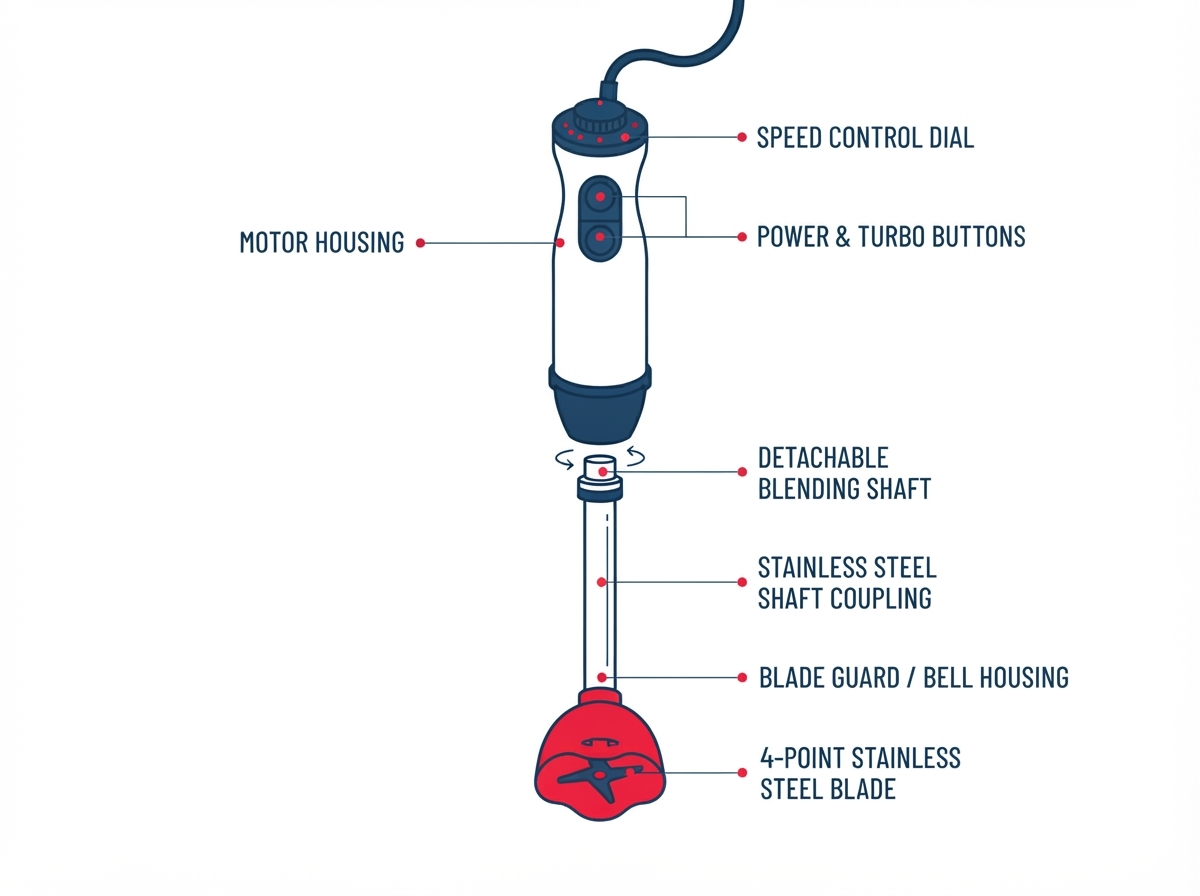
Variable speed triggers or dials give finer control over texture, preventing over-blending. A turbo or boost button is useful for quick bursts when tackling fibrous veggies or frozen fruit.
Blade and bell design
The blade shape and guard (the “bell”) affect suction, splash control, and efficiency. A bell with wide cutouts reduces vacuuming to the bottom of the pot, while multi-angled blades pull ingredients into the cutting path for smoother results.
Comfort and Control
Ergonomics and weight
A comfortable grip and balanced weight matter during longer blends. Slim handles fit smaller hands; rubberized or textured grips reduce slipping. If you cook in large batches, prioritize a lighter unit to minimize fatigue.
Reach and immersion depth
Check the shaft length. A longer shaft reaches deeper stockpots and tall pitchers without splashing. For small jobs, ensure the blade can fully submerge in a narrow cup to avoid aeration.
Build and Durability
Materials
Stainless steel shafts and bells withstand heat and staining better than plastic, and they’re typically safer for hot soups. Metal gears and a robust drive coupling improve longevity.
Duty cycle and cooling
Some motors are designed for short bursts rather than marathon blending. Look for thermal protection or guidance on continuous run time if you often blend thick mixtures.
Attachments and Versatility
One reason many choose an immersion hand blender is the add-on tools that convert it into a mini kitchen system.
- Whisk: For whipped cream, meringue, and quick batters.
- Mini chopper: Handles herbs, nuts, salsa, and small prep tasks.
- Blending cup: Tall, narrow cups promote better vortex formation for smoothies and dressings.
- Masher or frother (optional): Specialized tools for potatoes or beverages.
Verify that attachments lock securely and are easy to swap. If you’re after the best immersion blender for versatility, a solid core unit with a whisk and chopper is a smart starting point.
Cleaning and Maintenance
Detachable shaft
A removable blending arm simplifies cleaning and keeps the motor away from water. Many stainless shafts are dishwasher-safe, but always confirm the manufacturer’s guidance.
Anti-splash design
A well-shaped bell limits mess from the start, saving cleanup time. After blending, pulse the blade near the surface briefly to fling off drips before removing it from the mixture.
Noise, Safety, and Controls
Quieter motors and refined blade guards are easier on your ears, especially in open kitchens. Safety features to look for include a lockout switch, a shielded blade, and a stable power button that won’t engage accidentally. A soft-start function reduces splatter when first engaging the blade.
Price and Warranty
Budget models can excel at light tasks, but mid-range options often deliver better power, ergonomics, and attachments. For frequent use, a multi-year warranty and accessible replacement parts are strong value indicators.
Corded vs Cordless Immersion Blender
A corded model offers consistent power for long or tough jobs, with no downtime. If you regularly purée big pots of soup or blend thick mixtures, corded is hard to beat. A cordless immersion blender trades a bit of sustained power for freedom of movement which is great for small kitchens, outdoor cooking, or crowded countertops.
- Corded: Unlimited runtime, generally stronger torque, but you’re tethered and must mind the cable near hot surfaces.
- Cordless: Portable, clutter-free, quick to grab; check battery voltage, advertised run time, and recharge speed.
For most home cooks, cordless handles quick smoothies, sauces, and light soups; serious batch cooking or dense purées still favor corded consistency.
How to Use an Immersion Blender Safely and Effectively
If you’re new to the tool and wondering how to use an immersion blender, follow these simple steps for smooth, splash-free results:
- Submerge first: Ensure the blade is fully under the liquid before starting to minimize splatter.
- Start low: Begin on a low speed, then increase as needed for texture control.
- Move gently: Tilt and lift slightly to create a vortex; avoid pressing the bell hard against the pot.
- Mind heat: Turn off the burner before blending hot soups and keep the blade away from the pot bottom to protect finishes.
- Pulse for chunks: For rustic textures, use quick pulses instead of continuous blending.
- Clean promptly: Unplug, detach the shaft, and rinse immediately; dried-on food is tougher to remove.
Quick Comparison Checklist
- Power: 200–500W (everyday) vs 600W+ (heavy-duty).
- Speeds: Variable control, turbo option, soft-start.
- Design: Anti-suction bell, multi-angle blades, adequate shaft length.
- Comfort: Secure grip, balanced weight, easy-access buttons.
- Attachments: Whisk, chopper, cup; secure locking mechanism.
- Care: Detachable, dishwasher-safe shaft; clear cleaning guidance.
- Type: Corded for sustained power; cordless for convenience.
- Warranty and parts: Strong support for long-term value.
FAQ: Immersion Hand Blender Questions Answered
Is an immersion blender the same as a hand mixer?
No. A hand mixer uses beaters to aerate and mix batters or dough. An immersion blender uses blades to chop and purée liquids and soft solids. They serve different tasks and aren’t interchangeable.
Can an immersion hand blender crush ice?
Some can handle small amounts of cracked ice when combined with liquid, but many are not designed for dry ice crushing. Check your manual; using a mini chopper attachment (if rated) is often safer.
What wattage should I choose?
For smoothies, sauces, and soups, 300–500W works well. If you blend thick purées, beans, or nuts frequently, step up to 600W+ and a robust blade design.
Are cordless immersion blenders powerful enough?
Modern cordless models handle daily tasks easily, but sustained heavy loads may drain batteries faster or require cooldowns. If you need long, tough blends, a corded option is more reliable.
Will an immersion blender scratch nonstick cookware?
A stainless bell can scratch if dragged along the surface. Keep the bell slightly off the bottom or choose a model with a non-scratch guard designed for coated cookware.
Are attachments interchangeable between brands?
Generally no. Attachments are brand- and often model-specific. Verify compatibility before buying extras.
How do I clean and store it?
Unplug, detach the shaft, and rinse immediately. Many shafts are dishwasher-safe (top rack). Wipe the motor body with a damp cloth, dry thoroughly, and store with the blade covered.
Choosing the best immersion blender is about matching power, control, and attachments to your cooking style. Whether you opt for a corded workhorse or a cordless immersion blender for grab-and-go convenience, prioritizing ergonomics, blade design, and build quality will reward you with smoother blends, less mess, and years of dependable performance.
