


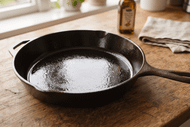
How to Season a Cast Iron Pan: The Complete, User-Friendly Guide
2026 Aug 10th
If you want a slick, durable, and naturally nonstick surface, learning how to season a cast iron pan is essential. This guide explains how to wash and season cast iron correctly, how long to season it for best results, and practical methods for seasoning it without an oven. Whether you’re restoring a thrift-store find or upgrading a new skillet, you’ll get clear, repeatable steps and troubleshooting tips.
Why Seasoning Matters
Seasoning is a thin, hard, plastic-like layer created when oil is heated past its smoke point and polymerizes onto the iron. This layer repels moisture (helps prevent rust), improves food release, and enhances flavor over time. Done right, seasoning is durable and low-maintenance, especially when paired with smart washing and drying habits.
What You’ll Need
- Cast iron pan (clean and free of heavy rust) - of course!
- Neutral, high-smoke-point oil: canola, grapeseed, rice bran, or refined avocado; flaxseed oil is also popular
- Paper towels or a lint-free cloth
- Stiff brush or nonmetal scrubber (chainmail optional)
- Warm water, optional mild dish soap
- Oven or stovetop (or an outdoor grill)
- Foil or a baking sheet to catch drips
- Tongs or heat-proof gloves for safety
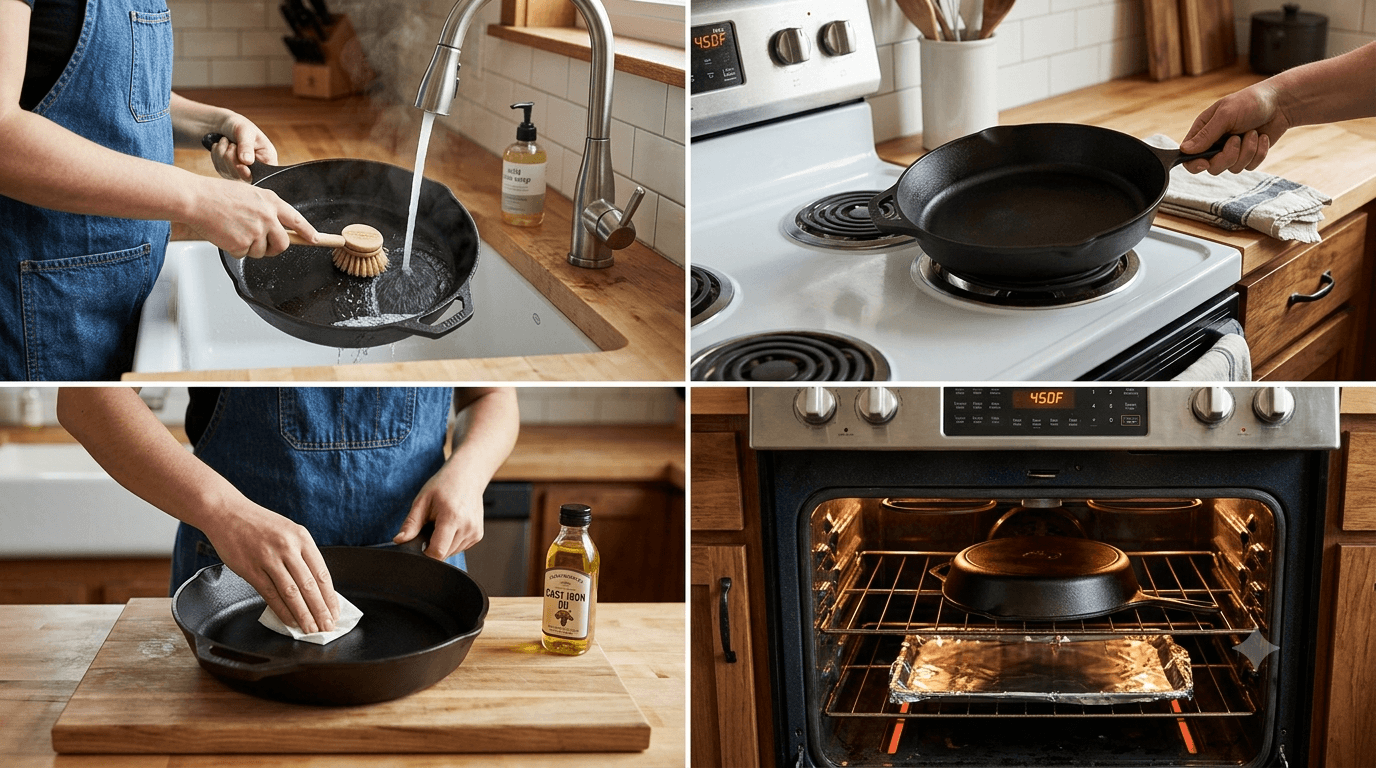
How to Wash and Season Cast Iron (Step-by-Step)
Step 1: Wash and Dry Correctly
To kick off the process, scrub the warm pan with a brush and hot water. A small drop of mild soap is safe for modern cast iron when needed. Rinse well. Immediately dry with a towel, then set the pan over low heat for 3–5 minutes to drive off all moisture; this prevents flash rust.
Step 2: Apply a Micro-Thin Layer of Oil
While the pan is warm, add 1 teaspoon of oil. Wipe it over the interior, exterior, and handle. Then use a clean towel to wipe almost all of it off; the key to great seasoning is an ultra-thin coat that won’t get sticky or gummy.
Step 3: Heat to Polymerize (Oven Method)
Place the pan upside down on the oven’s middle rack with foil on a lower rack to catch any drips. Bake at 450–500°F (230–260°C) for 60 minutes. Turn off the oven and let the pan cool inside to room temperature. This creates a hard, even seasoning layer.
Step 4: Repeat for a Strong Base
For new or stripped pans, repeat the oil-and-bake cycle 2–3 times. Each pass deepens color and durability. After this foundation, regular cooking and light oiling after washing will keep the surface improving.
How Long to Season Cast Iron
A single oven coat takes about 1 hour of baking plus cooling time (roughly 90 minutes total). For a brand-new or restored pan, plan 2–3 coats (3–4.5 hours total, mostly hands-off). Quick refresh? A 10–15 minute stovetop pass with a thin oil film can revive sheen after washing. The short answer to how long to season cast iron: one hour per coat, two to three coats for a robust base.
How to Season Cast Iron Without Oven Naturally
Stovetop Method
- Preheat the dry pan over medium heat until just starting to smoke lightly.
- Wipe on a micro-thin film of high-smoke-point oil; immediately buff off any excess.
- Heat 5–10 minutes until a wisp of smoke appears and subsides. Ventilate your kitchen.
- Let cool a few minutes, then repeat 2–4 times for layered seasoning.
Outdoor Grill or Campfire Method
- Preheat a gas or charcoal grill to high (450–500°F). For a campfire, cook over steady coals, not tall flames.
- Oil the pan thinly, place it upside down, and heat for 45–60 minutes.
- Cool gradually with the grill lid closed for an even cure.
Using a grill keeps smoke outside and is ideal for larger Dutch ovens or when you want to season cast iron without oven access.
Natural Cleaning and Prep Tips
Before seasoning, you can scrub with coarse salt and half a potato or a damp cloth to lift stuck bits naturally. For light rust, use a 1:1 vinegar and water soak for 20–30 minutes, scrub, rinse thoroughly, and dry, then proceed to seasoning.
For more cleaning tips, check out our guide on how to remove rust from a cast iron skillet!
Daily Care: Keep the Finish Strong
- After cooking, wipe out crumbs and stuck bits while the pan is warm.
- Rinse with hot water; a small amount of mild soap is fine if needed.
- Dry fully on low heat, then wipe on a few drops of oil and buff dry.
- Cook fatty foods early on to reinforce seasoning; avoid long acidic braises until the layer is mature.
Troubleshooting and Common Mistakes
- Sticky or tacky surface: Too much oil. Bake the pan empty at 450°F for 30–45 minutes to harden or wipe with hot water and a scrubber, then re-season with thinner coats.
- Flaking: Old, uneven layers. Scrub back to a smooth feel; if severe, strip and rebuild seasoning in thin coats.
- Rust spots: Remove with a scrubber, dry thoroughly, and reapply a thin oil coat. Re-season as needed.
- Uneven color: Normal in early stages. It evens out with use and additional thin coats.
- Excess smoke: Use a high-smoke-point oil, keep coats micro-thin, and ventilate well.
FAQ: Seasoning Cast Iron
Can I use soap when washing cast iron?
Yes, modern cast iron can handle a little mild dish soap. The polymerized seasoning is not easily washed away. Rinse well, dry fully on heat, and apply a thin oil wipe. This approach is central to how to wash and season cast iron the right way.
What is the best oil for seasoning?
Use a neutral, high-smoke-point oil such as canola, grapeseed, rice bran, or refined avocado. Flaxseed can create a very hard layer but may be brittle if applied too thick. The biggest factor is ultra-thin coats and proper heat.
How often should I season?
Do a full seasoning (2–3 coats) when the pan is new or after stripping. Day to day, maintain by drying on heat and wiping with a drop of oil. If food starts sticking or the surface looks dull, add a quick stovetop coat.
How long to season cast iron for the first time?
Plan 2–3 oven coats at about 1 hour each, plus cooling time, roughly 3–4.5 hours total. That foundation yields a tougher, more reliable nonstick surface.
My pan feels sticky, what should I do?
Bake the empty pan at 450–500°F for 30–45 minutes to harden any excess oil, or scrub lightly with hot water, dry, and re-season with much thinner coats.
Can I season on an induction, gas, or electric stovetop?
Yes. Heat the pan until lightly smoking, wipe on a micro-thin oil layer, and repeat 2–4 times. This is an effective method for how to season cast iron without oven naturally.
Is olive oil okay?
Extra-virgin olive oil has a lower smoke point and stronger flavor. It’s fine for cooking, but for seasoning layers, choose a higher smoke point oil for better polymerization and less smoke.
Do I need to preheat the oven?
Preheating helps consistency. Place the oiled, wiped pan in a 450–500°F oven for 60 minutes, then cool inside. Repeat for added durability.
Mastering how to wash and season cast iron will give you a pan that performs beautifully for decades. Keep coats thin, heat properly, and maintain it after every wash: your skillet will only get better with time!
