



How to Poach Eggs in a Poacher: Time, Technique, and Foolproof Results
2026 Jun 18th
If you love silky whites and a tender yolk but want a no-fuss method, learning how to poach eggs in a poacher is the easiest path to consistent, café-quality results. This guide covers setup, technique, and, most importantly, how long to poach an egg in a poacher so you can dial in your preferred doneness every time.
What You Need
- Egg poacher (stovetop poacher pan with cups, silicone poacher cups, or microwave egg poacher)
- Fresh large eggs (cold or room temperature)
- Water and a lid (for stovetop methods)
- Butter or neutral oil to grease cups
- Timer and optional instant-read thermometer
- Small spatula or thin knife to release eggs
- Paper towels for blotting
Step-by-Step: Poaching Eggs in a Stovetop Poacher
1) Prepare the Poacher Pan
Fill the poacher pan with about 1/2 inch of water (just enough to create steady steam without flooding the cups). Bring to a gentle simmer over medium heat; you want small, lazy bubbles, not a rolling boil. Target water temperature is roughly 185–195°F (85–90°C).
2) Prep the Cups
Lightly grease each cup with butter or oil to prevent sticking, then place the cups into the pan so they preheat for 30–60 seconds. Preheating helps set the egg whites more evenly.
3) Add the Eggs
Crack each egg into a small bowl, then pour gently into the greased, warmed cup. Avoid seasoning with salt until after cooking; salt can encourage sticking in some pans.
4) Cover and Cook
Cover the pan to trap steam and cook gently. For a standard metal-cup stovetop poacher, here’s how long to poach an egg in a poacher for common doneness levels:
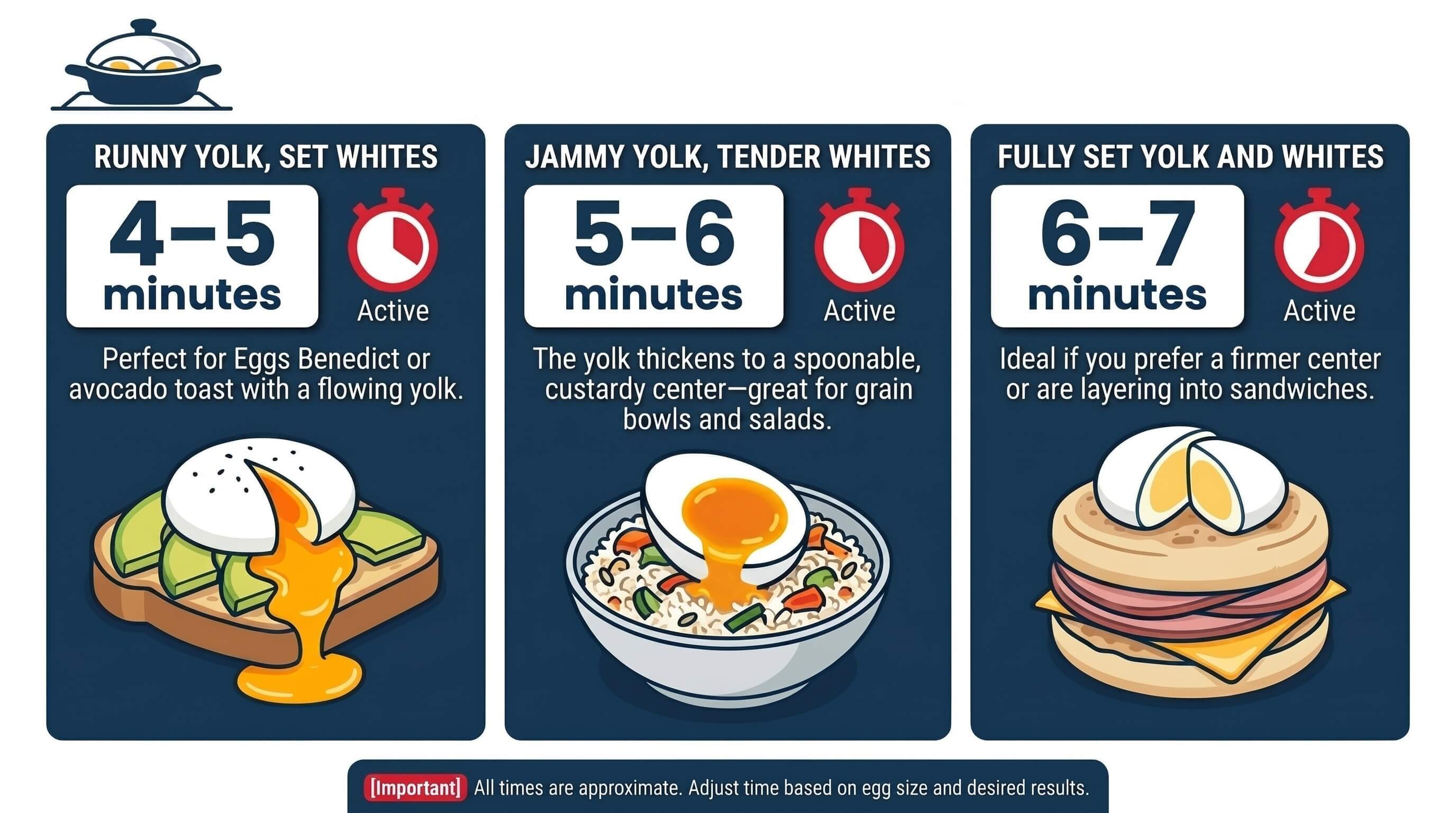
Note: Very cold eggs, extra-large eggs, or higher altitudes may require an additional 30–60 seconds.
5) Release and Serve
Remove the lid, check doneness with a gentle jiggle, and lift the cups. Run a thin spatula or knife around the edges to release. Invert onto a paper towel to blot any excess moisture, then plate and season immediately.
Timing Guide: Exactly How Long to Poach an Egg in a Poacher
Cook time depends on your poacher type, egg size, and heat intensity.
- Stovetop metal egg poacher (covered, gentle simmer): 4–5 minutes runny, 5–6 minutes jammy, 6–7 minutes firm.
- Silicone cups floating in simmering water: 5–6 minutes runny, 6–7 minutes jammy, 7–8 minutes firm (silicone insulates, so it’s slightly slower).
- Microwave egg poacher (1 large egg, 1000W): 40–60 seconds, then rest 15–30 seconds; add 10–20 seconds more only if needed. For 2 eggs, start at 60–90 seconds. Always follow your poacher’s directions.
- Multiple eggs or extra-large eggs: Add 30–60 seconds total time.
- Altitude adjustment: Expect 30–60 seconds longer above ~3,000 ft (915 m) because water simmers at a lower temperature.
Troubleshooting and Pro Tips
- Whites still runny: Cook covered 30–60 seconds longer, or ensure your water is gently simmering (not barely hot).
- Eggs sticking to the cup: Grease well, preheat cups, and release with a thin spatula. Salt after cooking.
- Rubbery texture: Heat is too high or time too long; maintain a gentle simmer and shorten cook time by 30–45 seconds.
- Uneven cooking: Rotate the poacher halfway through, especially on burners with hot spots.
- Vinegar: Not necessary with a poacher; it’s mainly used for free-form water poaching.
- Flavor upgrades: Butter the cups for better release and richer taste, or rub with a cut garlic clove for subtle aroma.
- Food safety note: Fully set yolks reach higher internal temps. If serving young children, pregnant people, older adults, or immunocompromised individuals, opt for jammy-to-firm yolks.
Serving Ideas and Make-Ahead
Serving Suggestions

- Classic: On toasted English muffins with ham or smoked salmon, plus hollandaise.
- Fresh: Over avocado toast with chili flakes and lemon zest.
- Hearty: On grain bowls, roasted vegetables, or sautéed greens.
- Light: Topped on salads, ramen, or tomato-basil bruschetta.
Make-Ahead and Reheating
Poached eggs reheat beautifully for quick breakfasts or brunch service.
- To store: Transfer just-cooked eggs to cool water, refrigerate up to 2 days.
- To reheat: Slide eggs into 160–170°F (71–77°C) hot water for 45–60 seconds until warmed through; blot before serving.
FAQ: Poaching Eggs in a Poacher
How long to poach an egg in a poacher?
For a stovetop metal egg poacher at a gentle simmer: 4–5 minutes for runny, 5–6 minutes for jammy, and 6–7 minutes for firm. Silicone cups usually add about 1 minute. In a microwave poacher, start at 40–60 seconds for 1 egg (1000W), then rest briefly and adjust in 10–15 second increments.
Can I use silicone poacher cups in a regular saucepan?
Yes. Float greased silicone cups in gently simmering water, cover, and cook 5–8 minutes depending on desired doneness. Because silicone insulates, times are slightly longer than with metal cups.
How do I prevent eggs from sticking to the cups?
Grease well, preheat the cups, avoid salting before cooking, and release the edges with a thin spatula or knife before inverting.
Can I poach multiple eggs at once?
Absolutely. Use all cups in your poacher, keep the lid on, and add 30–60 seconds total time if the pan cools slightly when loaded.
What’s the difference between poacher-cup eggs and classic water-poached eggs?
Poacher-cup eggs are uniformly shaped, easy to unmold, and highly consistent, great for batches. Free-form poached eggs have feathery whites and a more delicate texture but require more technique.
Why are my yolks overcooking while the whites finish?
The heat is too aggressive, or the lid was left on too long. Use a gentle simmer, cover just enough to set the whites, and pull the eggs as soon as they reach your target doneness.
