





How to Cook Rice: Foolproof Ratios, Simple Steps, and Pro Tips
2026 Jan 27th
Perfect, fluffy rice starts with two things: understanding the rice-to-water ratio and using a consistent method. Whether you want to learn how to cook rice in a pot for everyday meals or need a quick refresher on how cook rice on the stove, this guide gives you reliable steps, clear ratios, and troubleshooting tips so your rice turns out right every time.
Know Your Rice: Varieties and Prep
Different grains absorb water at different rates, so begin by identifying your rice. Long-grain (like basmati and jasmine) cooks separate and fluffy; medium- and short-grain tend to be more tender and slightly sticky; brown rice retains the bran, requiring more water and time; wild rice (technically a grass) needs the most water and a longer simmer.
Rinsing is optional for some, essential for others. Rinse white, jasmine, and basmati rice in cool water until mostly clear to remove excess surface starch that can cause clumping. For brown rice, rinsing is helpful for cleanliness and more even hydration. Soaking basmati for 20–30 minutes improves length and texture; short-grain for sushi may also benefit from a brief soak.
Dial in the Rice-to-Water Ratio
The rice-to-water ratio is the foundation of consistent results. Use these reliable starting points; then fine-tune based on your pot, stove, and preference.
Recommended ratios (by volume)
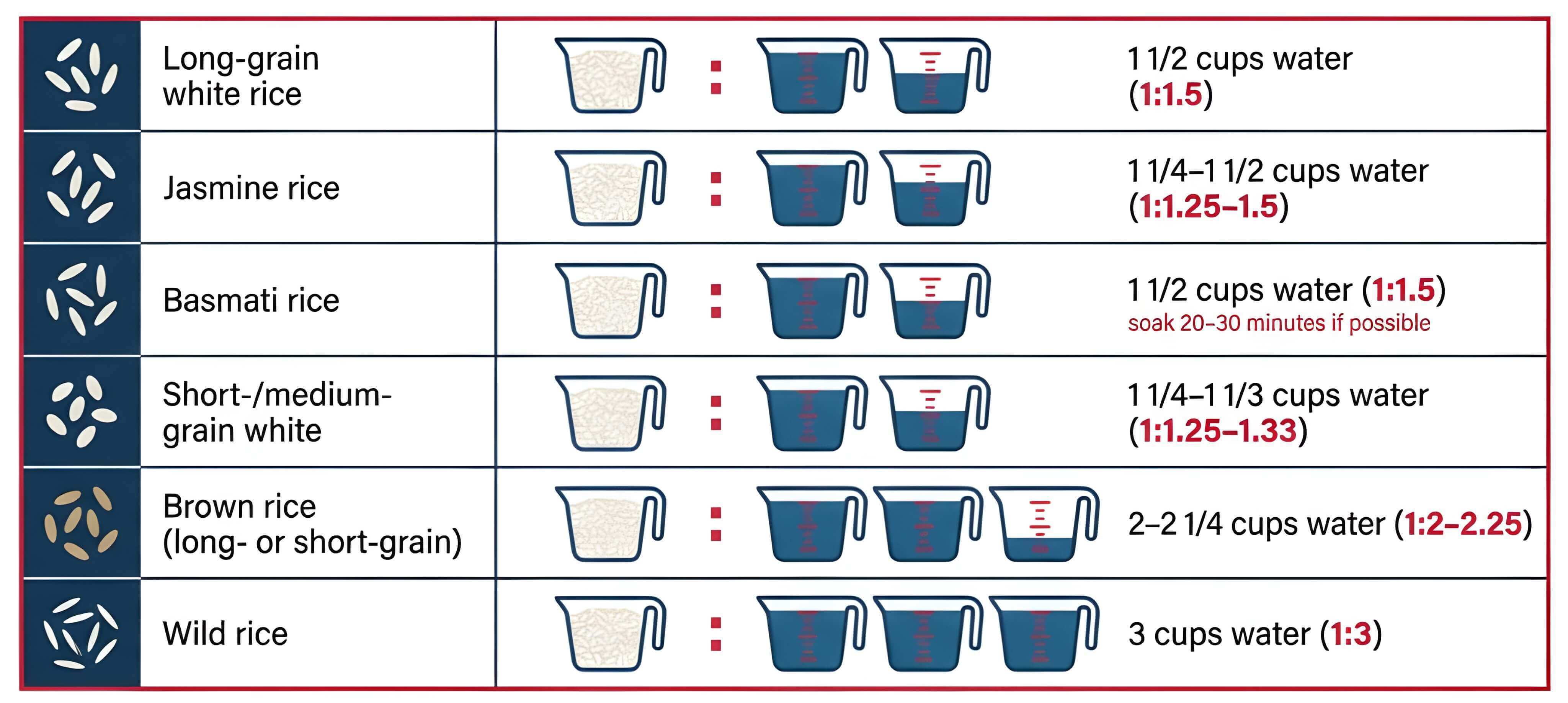
- Long-grain white rice: 1 cup rice to 1 1/2 cups water (1:1.5)
- Jasmine rice: 1 cup rice to 1 1/4–1 1/2 cups water (1:1.25–1.5)
- Basmati rice: 1 cup rice to 1 1/2 cups water (1:1.5); soak 20–30 minutes if possible
- Short-/medium-grain white: 1 cup rice to 1 1/4–1 1/3 cups water (1:1.25–1.33)
- Brown rice (long- or short-grain): 1 cup rice to 2–2 1/4 cups water (1:2–2.25)
- Wild rice: 1 cup rice to 3 cups water (1:3)
Adjust for equipment and environment
- Heavy, tight-lidded pots lose less steam; you may need slightly less water.
- Thin pots or ill-fitting lids let more steam escape; add 1–2 tablespoons water per cup.
- High altitude often needs a bit more water and time.
- If you prefer softer rice, increase water by 2–3 tablespoons per cup; for firmer rice, decrease by the same amount.
How to Cook Rice in a Pot (Stovetop Absorption Method)
If you’re wondering how to cook rice in a pot without guesswork, this classic absorption method works across varieties. It’s also the simplest answer to how cook rice on the stove with repeatable, fluffy results.
Step-by-step directions
- Rinse: Place rice in a fine-mesh strainer and rinse until water runs mostly clear; drain well.
- Measure: Add the correct rice to water ratio to a heavy-bottomed pot. For example, 1 cup long-grain white + 1 1/2 cups water.
- Season: Add a pinch of salt (1/4 to 1/2 teaspoon per cup of rice). Optional: 1 teaspoon oil or butter to reduce foaming.
- Boil: Bring to a gentle boil over medium heat without the lid.
- Simmer: Stir once to distribute, reduce the heat to low, cover tightly, and simmer undisturbed until water is absorbed.
- Rest: Turn off the heat, keep covered, and rest 10 minutes to let the steam finish the cook.
- Fluff: Lift the lid, fluff gently with a fork or paddle, and serve.
Timing guide (approximate)
- Long-grain white, jasmine, basmati: 12–15 minutes simmer + 10 minutes rest
- Short- or medium-grain white: 12–14 minutes simmer + 10 minutes rest
- Brown rice: 35–45 minutes simmer + 10 minutes rest
- Wild rice: 45–55 minutes simmer + 10 minutes rest
Tips to avoid sticky or scorched rice
- Use a pot with a thick base and a tight lid; don’t lift the lid during simmer.
- Keep heat low once covered; vigorous boiling can break grains and cause sticking.
- Do not stir during the simmer; it releases starch and makes rice gummy.
- If your stove runs hot, use a simmer plate or the smallest burner.
Flavor Upgrades and Variations
The pilaf method
For a nuttier flavor and separated grains, sauté rinsed, drained rice in a bit of oil or butter with aromatics (garlic, onion, bay leaf) for 2–3 minutes, then add hot water or broth using the same rice-to-water ratio. Cover and cook as usual.
Simple enhancements
- Cook in broth with a splash of olive oil or a pat of butter.
- Add whole spices (cardamom, cloves, cinnamon), pandan, or citrus peel.
- For coconut rice, replace half the water with coconut milk and add 1–2 tablespoons extra water per cup of rice.
- Season with salt, because under-seasoned rice tastes flat even when perfectly cooked.
Troubleshooting: Quick Fixes
- Too wet or mushy? Spread rice on a sheet pan and let steam off for a few minutes; or return to low heat uncovered for 2–4 minutes, stirring gently.
- Too dry or undercooked? Sprinkle 2–3 tablespoons of hot water per cup of rice, cover, and steam on low for 3–5 minutes; rest again.
- Scorched bottom? Move rice to a new pot without scraping the browned bits; cover and rest 5 minutes to release steam and save the top portion.
- Clumpy? Rinse next time and avoid stirring during the simmer; fluff thoroughly after the rest.
Frequently Asked Questions
What’s the best rice-to-water ratio for fluffy white rice?
For long-grain white rice, use 1:1.5 (1 cup rice to 1 1/2 cups water). Jasmine often benefits from slightly less (1:1.25–1.5), while basmati works well at 1:1.5, especially if soaked. Always rest 10 minutes after cooking.
How do I make rice on the stovetop if I don’t have a rice cooker?
The absorption method is ideal when learning how cook rice on the stove. Rinse, measure the correct rice to water ratio, bring to a boil, cover, simmer on low until absorbed, then rest and fluff. A heavy pot and a tight lid are key.
How to cook rice in a pot without it sticking?
Use a heavy-bottomed pot, keep the heat low once covered, and avoid stirring during the simmer. A small amount of oil or butter can reduce sticking, and proper ratios prevent excess starchiness.
Do I need to rinse rice before cooking?
Rinsing removes surface starch, leading to fluffier results for white, jasmine, and basmati. It’s optional for brown rice, but it can improve texture. For sushi rice, rinsing is essential for balanced stickiness.
Can I double the recipe and keep the same ratio?
Yes. Scale the rice-to-water ratio proportionally (e.g., 2 cups rice to 3 cups water for long-grain white). Use a larger pot to prevent boil-overs and maintain a gentle simmer.
