





How to Cook Basmati Rice: Water Ratios, Methods, and Chef-Style Tips
2026 Jan 29th
Basmati rice is prized for its long, separate grains and nutty aroma, but only if you cook it right. The key to consistently fluffy results is knowing the correct basmati rice-to-water ratio, rinsing or soaking appropriately, and choosing a technique that suits your equipment. Below is a comprehensive, step-by-step guide that mirrors the structure of top-performing cooking tutorials while prioritizing clarity, accuracy, and user-friendly instructions.
Why Basmati Needs a Specific Approach
Unlike medium-grain rice, basmati is a drier, longer grain with more surface starch. Rinsing removes excess starch that causes clumping, while soaking helps the grain hydrate evenly for straighter, longer kernels. With the right basmati rice to water ratio and gentle heat, you’ll get tender grains that separate easily and stay fragrant.
The Ideal Basmati Rice to Water Ratio
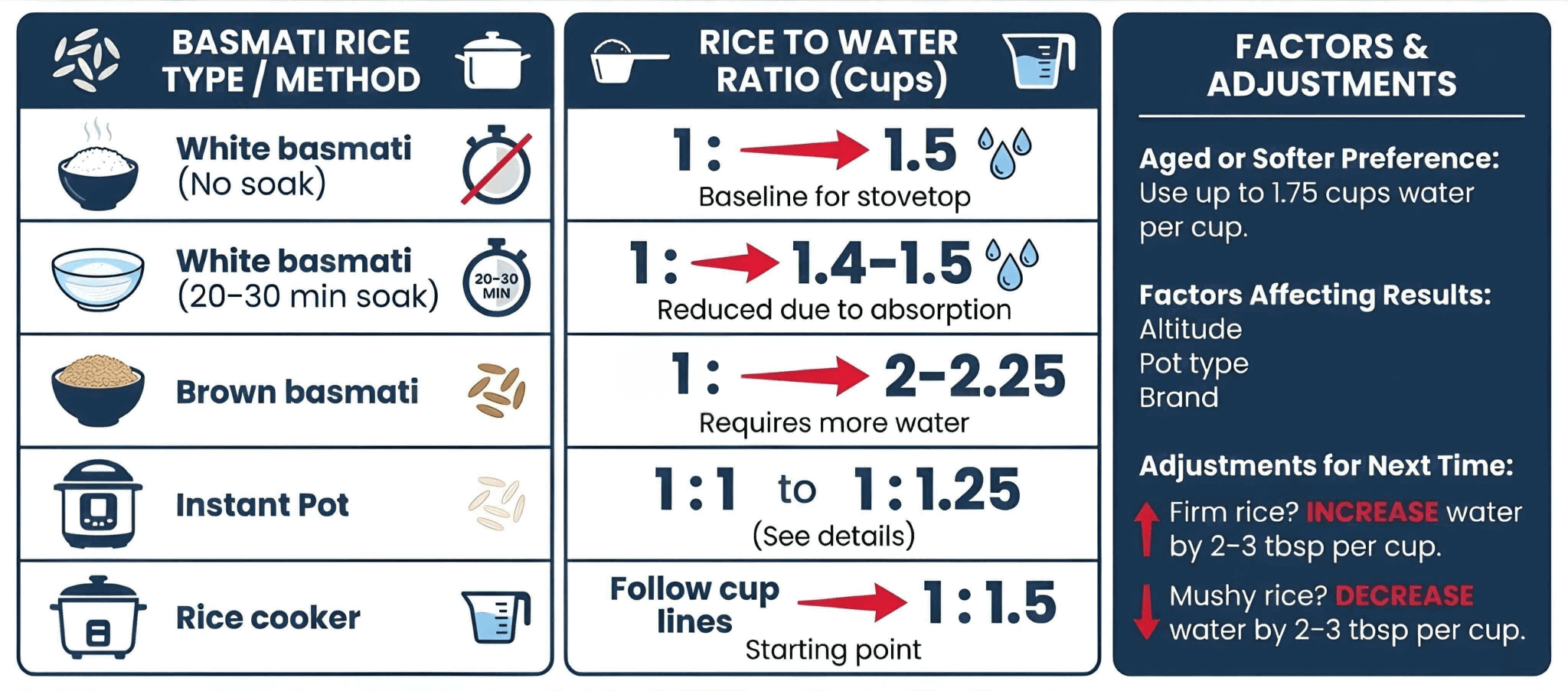
For most white basmati rice on the stovetop, the baseline ratio is 1 cup rice to 1.5 cups water. If your rice is particularly aged or you prefer softer grains, use up to 1.75 cups of water per cup of rice. When soaking for 20–30 minutes, reduce slightly to around 1.4–1.5 cups of water. Brown basmati requires more: about 1 cup rice to 2–2.25 cups water.
- White basmati (no soak): 1:1.5 basmati rice to water ratio
- White basmati (20–30 min soak): 1:1.4–1.5
- Brown basmati: 1:2–2.25
- Instant Pot: 1:1 to 1:1.25 (see details below)
- Rice cooker: follow cup lines or 1:1.5 as a starting point
Altitude, pot type, and brand can affect results. If your rice turns out firm, increase water by 2–3 tablespoons per cup next time; if mushy, decrease by the same amount.
Stovetop Absorption Method (Classic, Fluffy)
What You’ll Need
- 1 cup white basmati rice
- 1.5 cups water (adjust based on soaking and preference)
- 1/2 teaspoon fine sea salt (optional)
- 1 teaspoon oil or 1 teaspoon ghee (optional, for aroma and sheen)
- Medium, heavy-bottomed pot with a tight lid
Step-by-Step
Step 1: Rinse and Optional Soak
Place the rice in a sieve and rinse under cool water, swishing until the water runs mostly clear. For extra length and even cooking, soak rinsed rice in fresh water for 20–30 minutes, then drain well. If soaking, slightly reduce the basmati rice-to-water ratio, for example, from 1:1.5 to about 1:1.4–1.5.
Step 2: Measure and Boil
Add the measured water, salt, and fat (if using) to the pot and bring to a gentle boil over medium heat. Stir in the drained rice once, just to distribute it evenly. From this point, avoid stirring to keep grains from breaking and releasing starch.
Step 3: Gentle Simmer, No Peeking
Lower the heat to the smallest simmer, cover tightly, and cook for 12–15 minutes. Listen for a soft hiss rather than vigorous bubbling. The goal is for the grain to absorb all the water without scorching. Remember, your chosen basmati rice-to-water ratio is tuned for a sealed, gentle environment.
Step 4: Rest and Fluff
Remove from heat and let the pot stand, still covered, for 10 minutes. This resting period allows moisture to redistribute, finishing the texture. Fluff gently with a fork, lifting rather than stirring to keep grains separate.
Pro Tips for Perfect Texture
- Use a heavy pot and a tight lid to maintain steady steam and accurate absorption.
- A paper towel or clean kitchen towel under the lid can prevent condensation from dripping onto the rice.
- Do not stir during cooking; stirring activates starch and causes clumping.
- Season at the start for even salting; add whole spices (cardamom, bay, cinnamon) for aromatic pilafs.
Alternative Methods That Work
Rice Cooker
Rinse (and optionally soak) as above. For white basmati, start with a 1:1.5 basmati rice to water ratio or follow your cooker’s markings for long-grain white rice. Press start and let it switch to “warm,” then rest for 5–10 minutes before fluffing. If the results are too firm, add 2–3 tablespoons more water per cup next time.
Instant Pot/Pressure Cooker
Rinse well and drain thoroughly. Use a 1:1 to 1:1.25 ratio depending on your preferred texture and whether you soaked. Pressure cook on High for 5–6 minutes, then natural release for 10 minutes before venting. Fluff gently. The sealed environment reduces water needs compared to the stovetop.
Pilaf Method (Toasted, Extra-Fragrant)
Warm 1 tablespoon oil or ghee in a pot, add rinsed and well-drained rice, and toast 1–2 minutes until lightly fragrant. Add aromatics or spices if desired. Pour in water using a 1:1.5 basmati rice-to-water ratio, bring to a boil, cover, and simmer 12–15 minutes. Rest and fluff.
Common Mistakes and How to Fix Them
- Mushy rice: Too much water or heat too high. Next time, reduce water slightly (e.g., from 1.5 to 1.45 cups per cup of rice) and maintain a gentler simmer.
- Firm/undercooked rice: Too little water or the lid leaks steam. Add 2–3 tablespoons of hot water, cover, and steam on low for 3–5 minutes. Next time, increase the ratio a touch.
- Scorched bottom: Heat too high or pot too thin. Use a heavier pot, lower the heat earlier, and avoid peeking.
- Clumpy grains: Inadequate rinsing or stirring during cooking. Rinse thoroughly and avoid stirring once simmering starts.
Serving Ideas and Storage
Fluffy basmati is the ideal canvas for curries, kebabs, stews, and stir-fries. For extra aroma, finish with a dab of ghee or a squeeze of lemon.
- Pairings: Butter chicken, chana masala, grilled salmon, vegetable korma, or dal.
- Storage: Cool quickly, refrigerate in an airtight container up to 4 days, or freeze up to 1 month.
- Reheat: Sprinkle with a teaspoon of water per cup and steam on low or microwave covered until hot.
FAQ
Do I need to soak basmati rice?
Soaking is optional but helpful. A 20–30 minute soak yields longer, more even grains. If you soak, slightly reduce your basmati rice-to-water ratio (for example, 1:1.4–1.5 instead of 1:1.5–1.75).
What’s the best basmati rice to water ratio?
For white basmati on the stovetop, 1 cup rice to 1.5 cups water is a reliable starting point. Adjust to 1.6–1.75 if you prefer softer rice, or reduce slightly if soaking. Brown basmati typically needs 2–2.25 cups of water per cup of rice.
Should I add oil or ghee?
It’s optional. A teaspoon of oil or ghee adds aroma, a subtle sheen, and can help grains stay separate, especially in the pilaf method.
How long does basmati take to cook?
On the stovetop, 12–15 minutes of gentle simmering plus a 10-minute rest. In an Instant Pot, 5–6 minutes at High Pressure with a 10-minute natural release. Rice cookers vary; follow your model’s cues.
Can I double the recipe?
Yes. Keep the same basmati rice to water ratio and use a pot with enough surface area and a tight lid. Cooking time stays roughly the same; the initial boil may take longer.
Why is rinsing important?
Rinsing removes surface starch that causes clumping and stickiness. It’s the simplest step for transforming average rice into fluffy, separate basmati grains.
Need to cook other types of grains? Check out our full guide on how to cook rice, covering all varieties!
