





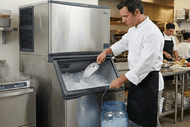
How to Clean an Ice Machine: A Complete Guide for Commercial Kitchens
2026 Feb 17th
If there's one piece of equipment in your commercial kitchen that often gets overlooked, it's the ice machine. We've seen it countless times: odd smells coming from the bin, cloudy or off-tasting ice, or worse, pink and brown slime forming in the corners. And honestly, in most cases, it's simply because the ice machine hasn't been cleaned properly or frequently enough.
Here's what many foodservice operators don't realize: Health Canada and provincial health authorities classify ice as food. That means your commercial ice machine is subject to the same health regulations and inspections as your walk-in cooler or prep station. A dirty ice machine doesn't just affect the taste of your beverages; it can lead to serious health code violations, costly fines, and damage to your reputation.
In this guide, we'll walk you through exactly how to clean an ice machine step by step, the tools you'll need, and the maintenance schedule that keeps your equipment running efficiently and your customers safe.
Why Cleaning Your Commercial Ice Machine Matters
Commercial ice machines operate in warm, moist environments, which are the perfect breeding ground for bacteria, mold, and biofilm. If left unchecked, these contaminants can quickly colonize your machine's interior surfaces, water lines, and storage bin.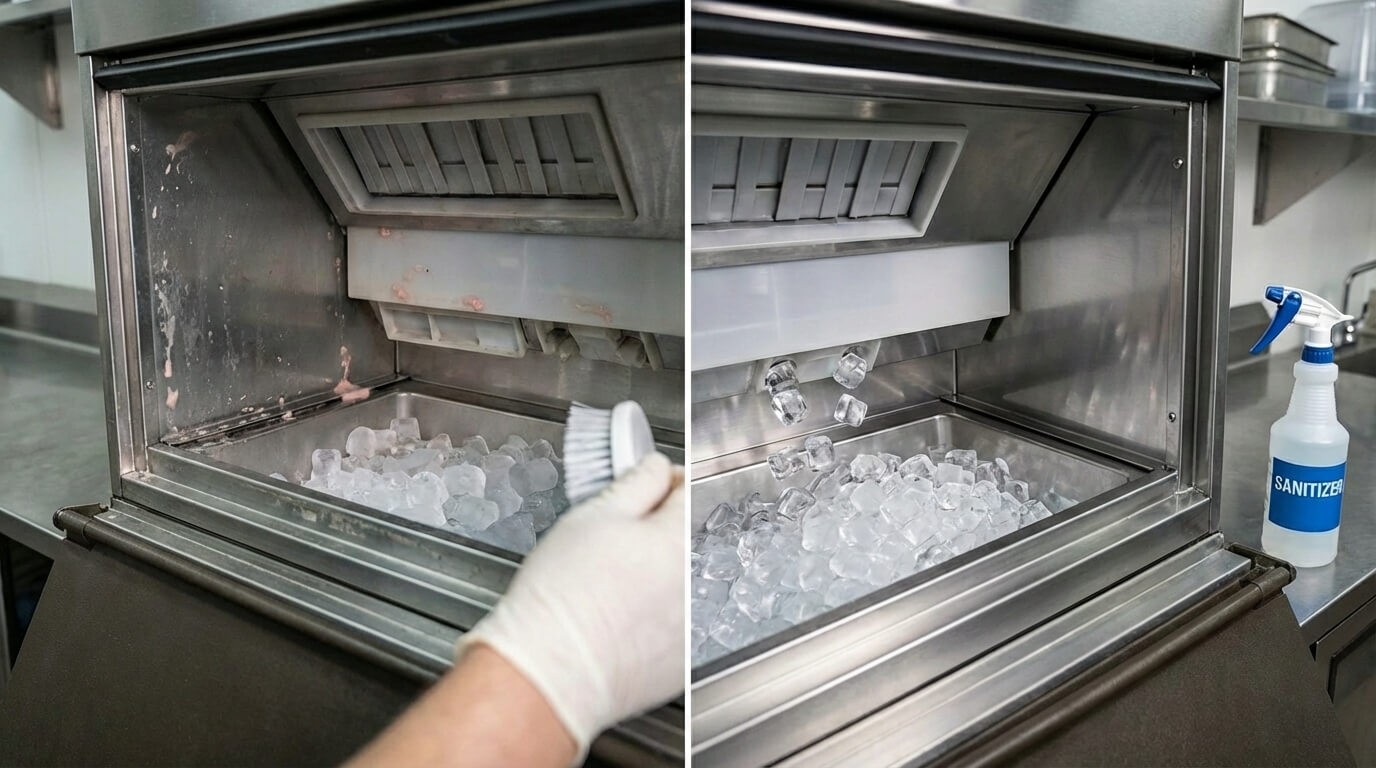
We've noticed that a clean ice machine simply performs better. The ice production stays consistent, the cubes are crystal clear, and there's no lingering smell when you open the bin. Beyond aesthetics, regular cleaning delivers critical benefits:
- Health and Safety Compliance: provincial health regulations require ice machines to be cleaned and sanitized at manufacturer-recommended intervals, typically 2-4 times per year at a minimum.
- Prevents Biofilm Formation: once biofilm establishes itself, it becomes extremely difficult to remove and can harbor dangerous pathogens like Listeria, E. coli, and Salmonella.
- Maintains Ice Quality: mineral scale buildup affects ice clarity, taste, and texture. Regular descaling keeps your ice looking and tasting fresh.
- Extends Equipment Life: scale accumulation reduces cooling capacity and forces the compressor to work harder, increasing energy consumption by up to 30% and shortening equipment lifespan.
- Avoids Costly Violations: a dirty ice machine can result in significant violation points during health inspections, points that can cost you your A rating.
How Often Should You Clean a Commercial Ice Machine?
We get this question constantly. While we recommend wiping down high-touch surfaces after every use, here's a general cleaning schedule for you:
- Daily: wipe exterior surfaces, clean ice scoops, and inspect for visible debris or contamination.
- Weekly: light cleaning of the ice bin interior with approved sanitizer solution.
- Every 3-6 Months: full deep cleaning and sanitization cycle, including all removable components, water lines, and condenser coils.
- Every 6 Months: replace water filters to maintain water quality and ice production efficiency.
Pro Tip: ice machines in pizzerias, bakeries, or breweries need more frequent cleaning due to airborne flour and yeast particles that accelerate mold growth. If your machine is located near a cooking line or in a humid environment, consider monthly deep cleaning.
Tools and Supplies You'll Need
Before you begin cleaning your ice machine, gather these essential supplies. Using the right products is crucial, as household cleaners can damage components or leave harmful residues.
- NSF-approved ice machine cleaner (nickel-safe if your evaporator has nickel plating)
- Ice machine sanitizer (quaternary ammonia-based or Health Canada-approved)
- Soft cloths or non-abrasive sponges
- Soft-bristle brush or old toothbrush for crevices
- Spray bottle for sanitizer application
- Compressed air or vacuum with soft brush attachment (for condenser coils)
- Personal protective equipment: gloves, safety glasses, and an apron
- Your ice machine's owner's manual
Important: ice machine cleaner removes mineral scale and lime deposits, while sanitizer eliminates bacteria and mold. These are two separate products that serve different purposes, so you'll need both for a thorough cleaning.
How to Clean an Ice Machine: Step-by-Step Guide
Follow these steps for a complete deep cleaning. Always consult your manufacturer's manual for model-specific instructions, as procedures may vary slightly between brands.
Step 1: Prepare the Machine
- Turn off the ice machine and disconnect it from the power supply.
- Shut off the water supply to the machine.
- Remove all ice from the bin and discard it; never serve ice that was present during cleaning.
- Allow the machine to come to room temperature for safer handling.
Step 2: Remove and Clean Components
- Remove all detachable parts: the ice bin, trays, baffles, curtains, and any other removable components.
- Mix ice machine cleaner with warm water according to the manufacturer's dilution ratio (typically 3-6 oz per gallon).
- Soak removable parts in the cleaning solution for 15-20 minutes to loosen scale and mineral deposits.
- Scrub each component with a soft brush or non-abrasive sponge, paying close attention to corners and crevices.
- Rinse thoroughly with clean water to remove all cleaner residue.
Step 3: Run the Cleaning Cycle
- Reconnect power and turn on the water supply.
- Press the "Clean" or "Wash" button on your machine (most commercial models have an automatic cleaning cycle).
- Once the water trough fills, add the recommended amount of ice machine cleaner.
- Allow the cleaning cycle to complete (typically 20-45 minutes depending on your model).
- The machine will automatically drain and rinse. Repeat if heavy scale buildup remains.
Step 4: Clean the Interior Surfaces
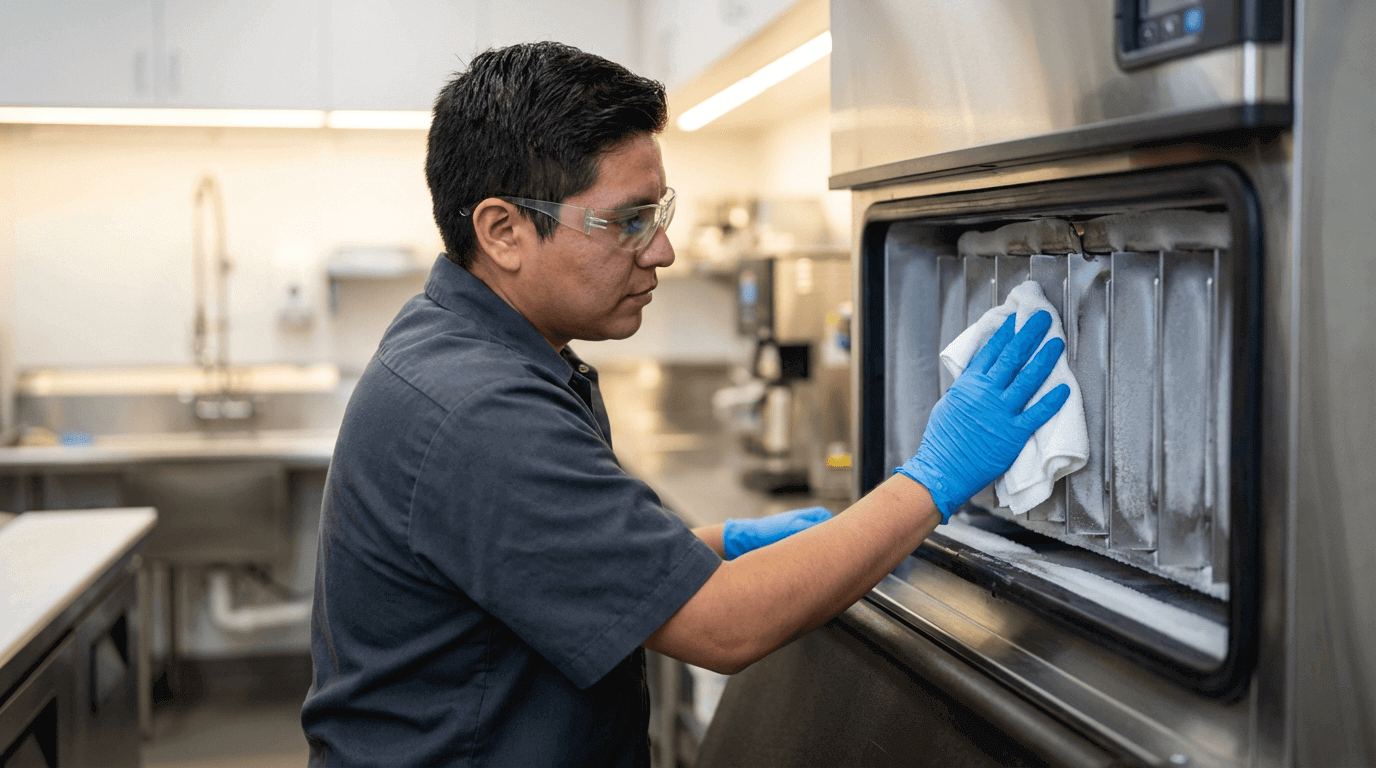
- Wipe down the interior walls of the machine with a cloth dampened with cleaner solution.
- Use a soft brush or toothbrush to clean the evaporator plates, being careful not to damage the fins.
- Clean the drain lines by flushing with a cleaner solution to remove any blockages.
- Rinse all surfaces thoroughly with clean water.
Step 5: Sanitize the Machine
After cleaning, sanitizing is essential to eliminate bacteria and mold that the cleaner may not address.
- Mix sanitizer solution according to manufacturer instructions (typically 2 oz per 3 gallons of water for 200 ppm quaternary solution).
- Use a spray bottle to liberally apply sanitizer to all food-contact surfaces: the ice bin, evaporator, water distribution components, and interior walls.
- Sanitize all removable parts that were previously cleaned.
- Allow the sanitizer to air dry; do not rinse (most food-safe sanitizers are no-rinse formulas).
- Reassemble all components.
Step 6: Clean the Condenser and Exterior
- Locate the condenser coils (usually behind a panel on the back or bottom of the machine).
- Use compressed air or a vacuum with a soft brush to remove dust and debris from the coils. Be careful not to bend the delicate fins.
- Remove and wash the air filter with soap and water. Allow it to dry completely before reinstalling.
- Wipe down the exterior of the machine with a damp cloth and mild detergent.
- Avoid using abrasive cleaners, chlorine solutions, or corrosive chemicals on exterior surfaces.
Step 7: Restart and Discard Initial Ice
- Reconnect the power and water supply to the ice machine.
- Run the sanitizing cycle if your machine has one, or initiate normal ice production.
- Discard the first two batches of ice produced, as these may contain residual cleaner or sanitizer.
- Monitor the machine through several cycles to ensure proper freeze and harvest times.
Signs Your Ice Machine Needs Immediate Cleaning
Don't wait for your scheduled maintenance if you notice any of these warning signs:
- Cloudy, white, or discolored ice
- Ice with unusual taste or odor
- Visible pink, brown, or black slime (mold or biofilm) in the bin or on components
- Reduced ice production or smaller-than-normal cubes
- Ice that won't release properly from the evaporator
- Longer freeze or harvest cycles
- Machine running louder than usual
Common Ice Machine Cleaning Mistakes to Avoid
- Using household cleaners: bleach, oven cleaners, and all-purpose sprays can damage components and leave harmful residues. Always use NSF-approved ice machine cleaners.
- Skipping the sanitizing step: cleaning removes visible deposits; sanitizing kills bacteria. Both are necessary for food safety compliance.
- Forgetting the condenser: dirty condenser coils reduce efficiency and can cause the machine to overheat. Clean them every 3-6 months.
- Using abrasive tools: steel wool, metal scrapers, and hard brushes can damage the non-stick coating and create scratches where bacteria can hide.
- Not replacing water filters: clogged filters reduce water quality and ice production. Replace them every 6 months.
- Serving ice during or immediately after cleaning: always discard the first 2-3 batches after cleaning to avoid serving contaminated ice.
Frequently Asked Questions
Can I use vinegar to clean my commercial ice machine?
While vinegar can help with light descaling, it's not recommended for commercial ice machines. Commercial-grade ice machine cleaners are specifically formulated to remove mineral scale without damaging components, and they're designed to work with your machine's cleaning cycle. Using unapproved products may also void your warranty.
How do I clean mold from my ice machine bin?
To remove mold from the ice bin, first empty all the ice. Spray the affected areas with a solution of 20% chlorine bleach and 80% water, or use a Health Canada-approved ice machine sanitizer. Wipe away the growth, spray again, and allow to air dry. For persistent mold issues, schedule a professional deep cleaning and consider increasing your cleaning frequency.
Is it safe to clean the ice machine's heating element?
Yes, but proceed with caution. Ensure the machine is unplugged and cooled completely. Use only a soft brush or cloth with a mild cleaning solution. Avoid getting electrical components excessively wet, and allow everything to dry completely before restoring power.
What's the difference between ice machine cleaner and sanitizer?
Ice machine cleaner (typically phosphoric acid-based) removes mineral scale, lime deposits, and hard water buildup. Sanitizer (usually quaternary ammonia-based) kills bacteria, mold, and other microorganisms. You need both products for proper ice machine maintenance: first clean to remove deposits, then sanitize to eliminate pathogens.
How do I know if my ice machine needs professional service?
Consider calling a professional technician if you notice persistent issues after cleaning (unusual noises, ongoing production problems, or recurring mold growth), if the machine requires disassembly beyond basic removable parts, if you're uncomfortable performing the cleaning yourself, or if it's time for your semi-annual preventive maintenance visit.
Keep Your Ice Clean, Keep Your Customers Safe
Learning how to clean an ice machine properly is one of the most important maintenance skills for any commercial kitchen operator. A clean ice machine not only produces better-tasting, crystal-clear ice but also protects your customers' health, keeps you compliant with Health Canada and provincial health regulations, and extends the life of your equipment.
By following the step-by-step process outlined in this guide and maintaining a regular cleaning schedule, you'll avoid costly health code violations and ensure your ice machine operates at peak efficiency for years to come.
Ready to explore commercial ice machines for your business? Browse our selection of industry-leading ice makers, bins, and accessories.
