


How to Clean a Breville Espresso Machine: Step-by-Step Guide with Natural Descaling Tips
2026 Apr 29th
Keeping your Breville espresso machine clean is the fastest path to better-tasting shots, consistent pressure, and a longer appliance lifespan. This guide covers daily, weekly, and monthly care, plus exactly how to descale a Breville using both Breville’s solution and a gentle, natural option. Whether you own a Barista Express, Barista Pro/Touch, Bambino, Dual Boiler, or Oracle, the principles below apply, but always check your model’s manual for button sequences and safety notes.
Why Cleaning and Descaling Matter
- Flavor: Old coffee oils go rancid and cloud delicate espresso notes.
- Performance: Scale buildup reduces temperature stability and water flow.
- Longevity: Regular care prevents clogged solenoids, leaking gaskets, and pump strain.
What You’ll Need
- Soft microfiber cloths and a group-head brush
- Breville cleaning tablets and the silicone cleaning disc (for models with backflush)
- Food-safe espresso cleaner for soaking baskets/portafilter
- Descaling solution (Breville-branded) or food-grade citric acid for a natural option
- Filtered water (reduces future scale)
- A small pin or Breville’s tool for steam-tip holes
Safety first: Power off, unplug, and let the machine cool before deep cleaning. Never immerse the base or expose internal electronics to water.
If you're missing something, check out more cleaning & maintenance tools at Williams Food Equipment!
Step-by-Step Cleaning Routine
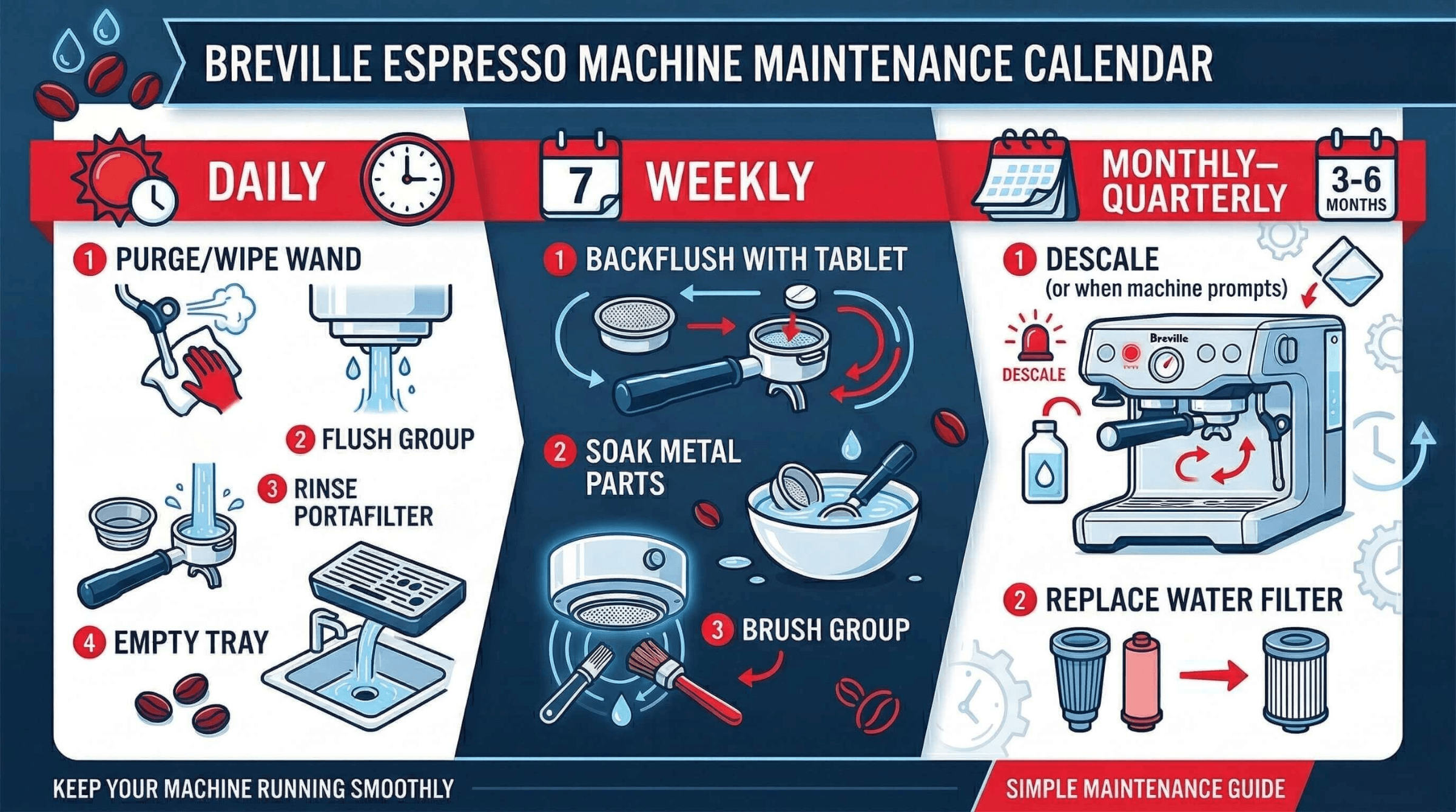
Daily: 2-Minute Flavor Saver
- Purge and wipe the steam wand: Immediately after steaming, point into the drip tray, open the steam for 2–3 seconds, then wipe with a damp cloth. If milk dries on the tip, briefly soak it in warm water.
- Flush the group head: Run water for a few seconds to clear coffee fines after your last shot.
- Rinse portafilter and baskets: Avoid dish soap residue; hot water is best.
- Empty the drip tray and knock box: Prevents odors and mold.
Weekly: Deep Clean and Backflush
Most Breville models with a three-way solenoid valve (e.g., Barista Express/Pro/Touch, Dual Boiler, Oracle) support backflushing. Check your manual if unsure.
- Backflush with a cleaning tablet: Insert the silicone cleaning disc (or blind basket) into the portafilter, add a Breville tablet, lock in, and run the cleaning/backflush cycle as per your model’s instructions. Repeat until the expelled water is clear.
- Soak metal parts: Soak the portafilter, baskets, and shower screen screws in espresso cleaner solution (avoid soaking handles). Rinse thoroughly.
- Clean the group head: Scrub the shower screen and gasket with a group brush while running short pulses of water.
- Grinder care: Brush out the hopper and chute. Wipe the hopper with a dry cloth. Avoid water on burrs.
Monthly (or When Prompted): Descale the Machine
Descaling removes mineral deposits from the boiler, thermocoil, steam path, and valves. Frequency depends on water hardness: every 1–3 months for hard water, 3–6 months for soft/filtered water.
- Remove the water filter from the reservoir before any descaling.
- Prepare your solution: Use Breville’s descaler per label instructions, or follow the natural method below.
- Run the descale cycle: Many Breville models have a dedicated mode. Follow your manual to cycle the solution through brew, steam, and hot water paths until the tank is empty.
- Rinse thoroughly: Refill with fresh water and run at least one full tank through all paths to eliminate residue and taste.
- Reinstall the water filter once finished.
How to Descale Breville Espresso Machine Naturally (Gentle Citric Acid Method)
Citric acid is a reliable, low-odor choice. Note: Some manufacturers discourage vinegar due to odor, potential gasket wear, and lingering taste. Always check your model’s manual and warranty guidance.
- Mix the solution: Dissolve 1–2 tablespoons (15–30 g) of food-grade citric acid per liter of warm water. Stir until completely clear.
- Fill the tank with the solution. Remove any charcoal/ion-exchange filter first.
- Descale: Activate your machine’s descale mode (refer to your manual). Cycle solution through the brew head, steam wand, and hot water outlet.
- Pause and soak: If buildup is heavy, let the machine rest 10–15 minutes mid-cycle so the solution can work, then resume.
- Rinse: Empty, then run at least one full tank of fresh water through all circuits until there’s no acidity or scent.
Rinse Verification
- Pull a blank shot (no coffee) and taste the water. It should be neutral.
- Steam a small cup of water; smell for any citrus note. If present, keep rinsing.
Troubleshooting and Pro Tips
- Slow flow or low pressure: Backflush and descale. Check the shower screen for coffee oils.
- Weak steam: Descale and purge the wand. Inspect tip holes for milk residue; clear with a pin gently.
- Bitter or sour shots: Clean the group head and baskets; old oils are likely the culprit.
- Use filtered water: Slows scale, extends time between descales, and improves taste.
- Replace water filters: Swap every 2–3 months or per usage/water hardness.
FAQ: Cleaning and Descaling Breville Espresso Machines
How often should I clean and descale?
Clean daily and weekly as outlined. Descale every 1–3 months in hard water areas and every 3–6 months with soft/filtered water, or whenever your machine’s alert appears.
Can I use vinegar to descale?
Vinegar works but is not recommended for many espresso machines due to the strong odor, potential impact on rubber components, and lingering taste. If you want a natural option, use food-grade citric acid and rinse thoroughly.
What’s the difference between cleaning and descaling?
Cleaning removes coffee oils and residue from the group, portafilter, shower screen, and solenoids (often via backflushing). Descaling dissolves mineral deposits in internal water paths. You need both for peak performance.
Do all Breville models support backflushing?
No. Many with a three-way solenoid do (e.g., Barista Express/Pro/Touch, Dual Boiler, Oracle). Compact thermoblock models may have different procedures. Check your manual.
How do I know it’s time to descale?
Look for slow water flow, temperature inconsistency, weaker steam, or a descale prompt. Taste can also flatten when scale builds up.
What’s the best natural descaler?
Food-grade citric acid is the top natural pick. It’s effective, affordable, and low-odor. If you’re focusing on how to descale a Breville espresso machine naturally, start with 1–2 tbsp per liter and rinse well.
Should I remove the water filter during descaling?
Yes. Always remove the reservoir’s water filter before adding any descaling solution, then reinstall a fresh or rinsed filter after you’ve thoroughly flushed the machine.
Build these habits into your routine and your Breville will reward you with cleaner flavors, consistent performance, and years of reliable service.
