


Food Temperature Danger Zone: Safe Holding & Cooking
2026 Sep 28th
Understanding the food temperature danger zone is essential for preventing foodborne illness at home and in commercial kitchens. When perishable food remains within an unsafe temperature range, bacteria such as Salmonella, E. coli, and Clostridium perfringens can multiply rapidly. Food may still look, smell, and taste normal even when it contains dangerous levels of bacteria.
This guide explains the danger zone, recommended food-safe temperatures, proper storage practices, and how long can food sit out before it should be refrigerated or discarded.
What Is the Food Temperature Danger Zone?
The food temperature danger zone is generally defined as 40°F to 140°F (4°C to 60°C) by the USDA. Within this range, bacteria can grow quickly, especially in moist, protein-rich foods.
The FDA Food Code uses a slightly narrower range of 41°F to 135°F (5°C to 57°C) for many food-service requirements. This difference reflects the standards used by different regulatory agencies. A practical rule is to keep cold food at 40°F or below and hot food at 140°F or above whenever possible.
Foods Most at Risk
Time and temperature control for safety foods, often called TCS foods, require particularly careful handling. Common examples include:
- Meat, poultry, seafood, and eggs
- Milk, cheese, and other dairy products
- Cooked rice, pasta, beans, and vegetables
- Gravies, soups, casseroles, and sauces
- Cut melons, cut tomatoes, and leafy greens
- Prepared foods containing animal products or cooked ingredients
How Long Can Food Sit Out?
The standard answer is no more than two hours at normal room temperature. When the surrounding temperature is above 90°F (32°C), such as at a picnic or outdoor event, that limit falls to one hour.
The clock is cumulative. Food that sits out for an hour, returns to the refrigerator, and later sits out again has already used part of its safe time. Refrigerating food does not reset the clock or eliminate toxins that bacteria may have produced.
The Two-Hour and Four-Hour Rules
For household safety, refrigerate perishable food within two hours and discard it when the safe limit has been exceeded. Some food-service regulations use a controlled four-hour procedure when food is intentionally held without temperature control. This requires documented starting temperatures, time marking, and disposal at the deadline. It should not be treated as permission to leave leftovers out all afternoon.
Essential Food Safe Temperatures
Color and texture are not reliable ways to determine whether food is fully cooked. Use a calibrated food thermometer and measure the thickest part without touching bone, fat, or the cooking pan.
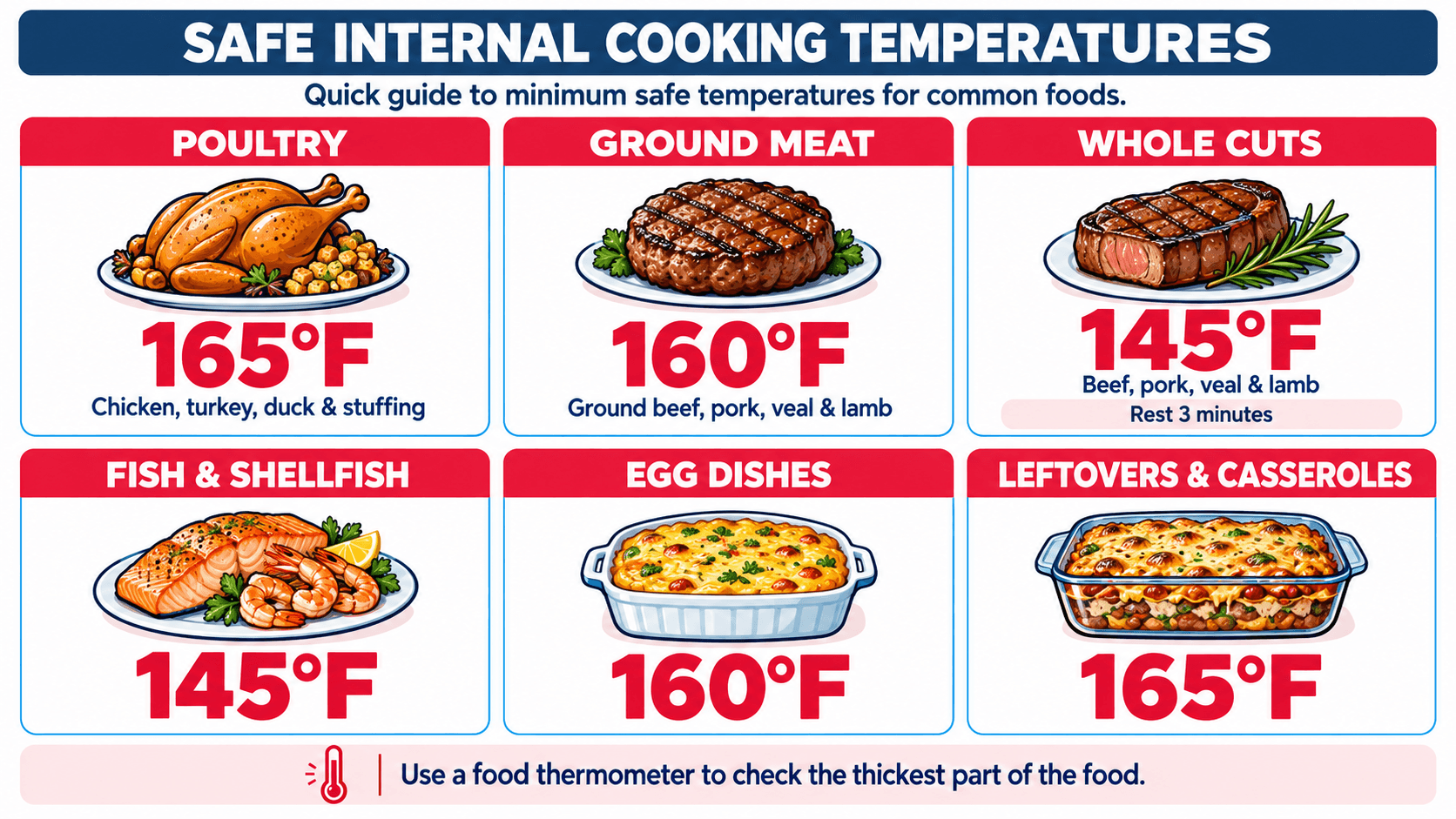
Recommended Internal Cooking Temperatures
The following USDA internal cooking temperatures provide useful minimum safety targets:
How to Check Temperature Correctly
Check large or irregularly shaped foods in multiple places because temperature can vary. Insert the probe sideways into thin foods such as burgers. Clean and sanitize the thermometer between uses to avoid transferring bacteria from raw food to cooked food.
Safe Hot Holding and Cold Holding
Cooking food safely is only one part of temperature control. Hot food should generally be held at 135°F or above under the FDA Food Code, while cold food should remain at 41°F or below. Many operators use more conservative targets of at least 140°F for hot food and no more than 40°F for cold food.
Steam tables and warming trays are intended to maintain temperature, not reheat cold food. Reheat leftovers rapidly to 165°F before moving them to hot-holding equipment.
Walk-In Cooler Temperature Guidelines
A safe walk-in cooler temperature is 41°F or below, although many commercial kitchens set their units between 35°F and 38°F. The lower operating target provides a buffer for door openings, warm deliveries, and equipment defrost cycles.
Place an accurate thermometer in the warmest section of the cooler and maintain temperature logs. Avoid overloading shelves because cold air must circulate around food. Store ready-to-eat items above raw seafood, whole cuts, ground meat, and poultry to reduce cross-contamination risks.
How to Cool Food Safely
Large containers of hot food may remain in the danger zone for hours, even after being placed in a refrigerator. Under FDA Food Code guidance, cooked TCS food should cool from 135°F to 70°F within two hours and then from 70°F to 41°F within four additional hours.
Divide food into shallow containers, separate large portions, use an ice-water bath, or add ice as an ingredient when appropriate. Leave space around containers for airflow. Cover food loosely during active cooling, then seal it after it reaches a safe refrigeration temperature.
Frequently Asked Questions
What temperature allows bacteria to grow fastest?
Bacteria can reproduce throughout the food temperature danger zone, but particularly rapid growth may occur between approximately 70°F and 125°F. Time, moisture, acidity, and the type of food also affect growth.
Can I tell whether food is unsafe by smelling it?
No. Pathogenic bacteria do not always change a food’s smell, appearance, or flavor. When food has exceeded safe time or temperature limits, tasting it is not a safe test.
Does reheating food make it safe again?
Not always. Reheating can destroy many living bacteria, but certain organisms produce heat-stable toxins. Food left in the danger zone too long should be discarded rather than reheated.
What should refrigerator and freezer temperatures be?
Keep refrigerators at 40°F or below and freezers at 0°F (-18°C) or below. Use appliance thermometers because control-panel displays may not reflect the temperature around stored food.
When should leftovers be refrigerated?
Refrigerate leftovers within two hours, or within one hour when temperatures exceed 90°F. Divide large amounts into shallow containers so they cool quickly and safely.
