


Commercial Cheese Slicers: A Complete Guide to Choosing, Using, and Maintaining
2026 Feb 23rd
Commercial cheese slicers are essential for delis, restaurants, catering operations, and high-volume kitchens that need consistent slices, fast prep, and precise portion control. The right slicer improves yield, reduces waste, and keeps service moving during rush periods.
This guide covers types of slicers, how to use a cheese slicer safely and effectively, and what to consider when selecting the best machine for your menu and volume. You’ll also find recommendations for the best cheese slicer for block cheese, hard cheese, and thin slices, plus storage tips.
Types of Commercial Cheese Slicers
Powered Deli Slicers
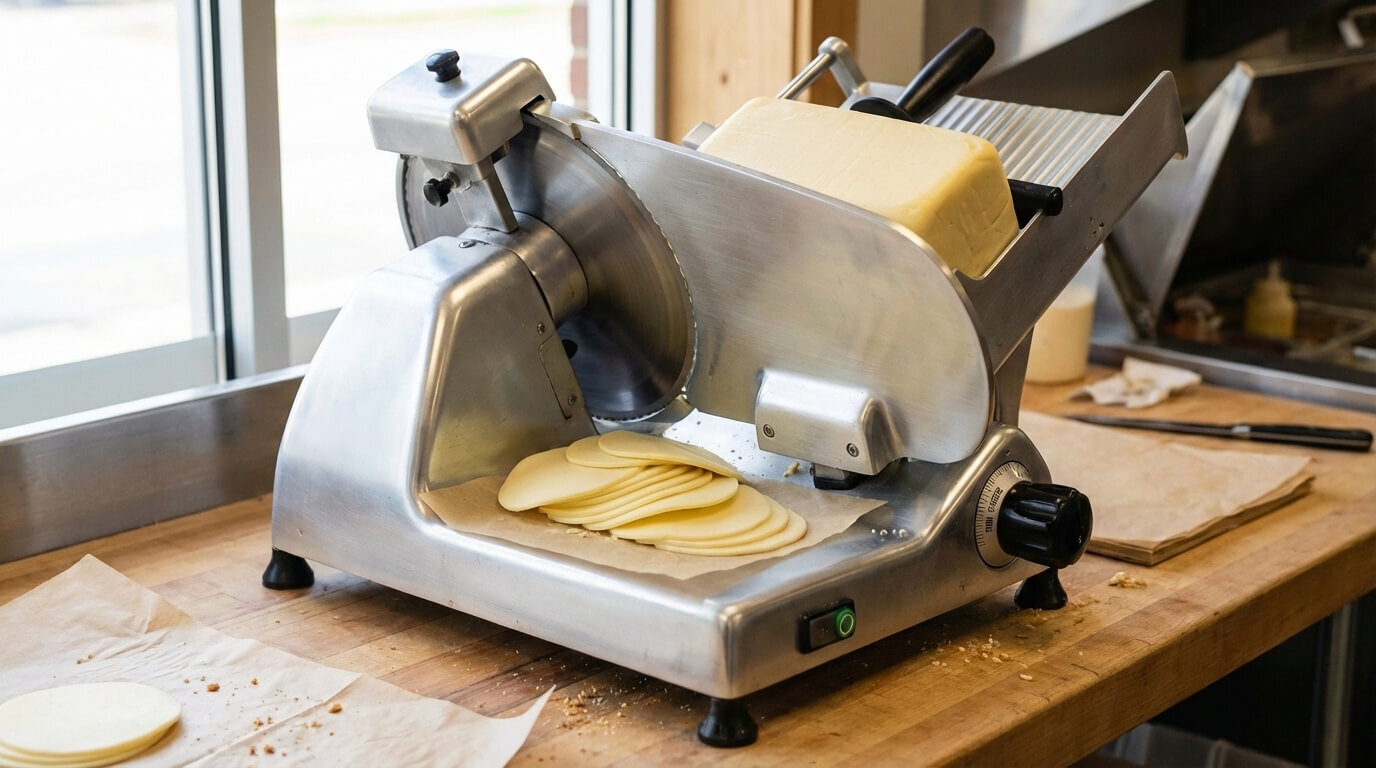
Powered slicers use a rotating circular blade and an adjustable thickness dial to produce uniform slices quickly. For cheese, look for models with features tailored to stickier, softer foods.
What to Look For
- Low-friction or Teflon-coated blade (reduces drag and sticking)
- Variable speed or lower blade RPM for delicate cheeses
- Large carriage and robust pusher for oversized blocks
- Fine-thickness adjustment (down to paper-thin)
- NSF certification and tool-free disassembly for cleaning
Manual Wire and Board Slicers
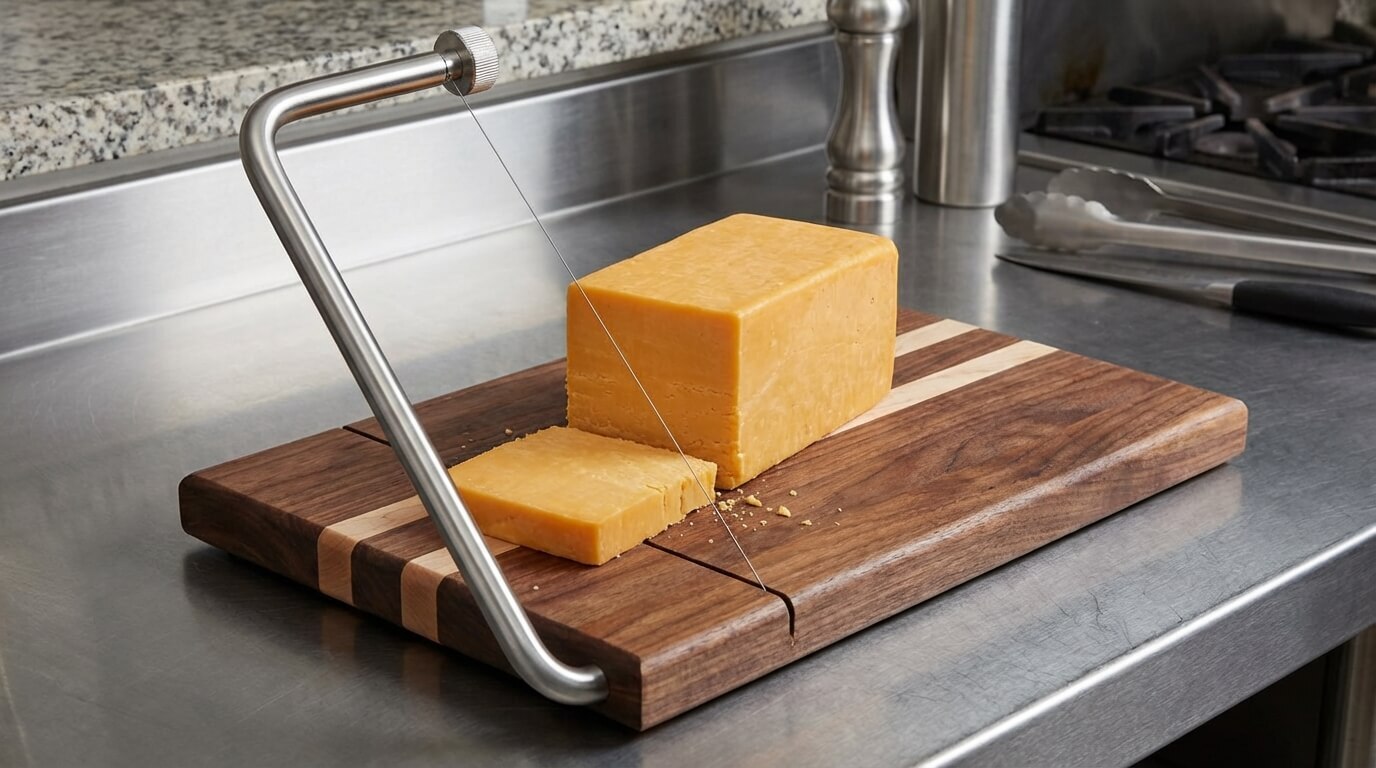
Wire slicers use a tensioned wire to cut cleanly through soft and semi-soft cheeses without crushing. Board-style units with adjustable fences are popular in prep stations for portioning.
What to Look For
- High-tension, replaceable wires (stainless or high-carbon)
- Adjustable guides for uniform thickness
- Sturdy base and non-slip feet for safety
- Food-safe materials and easy sanitation
Guillotine and Lever Slicers
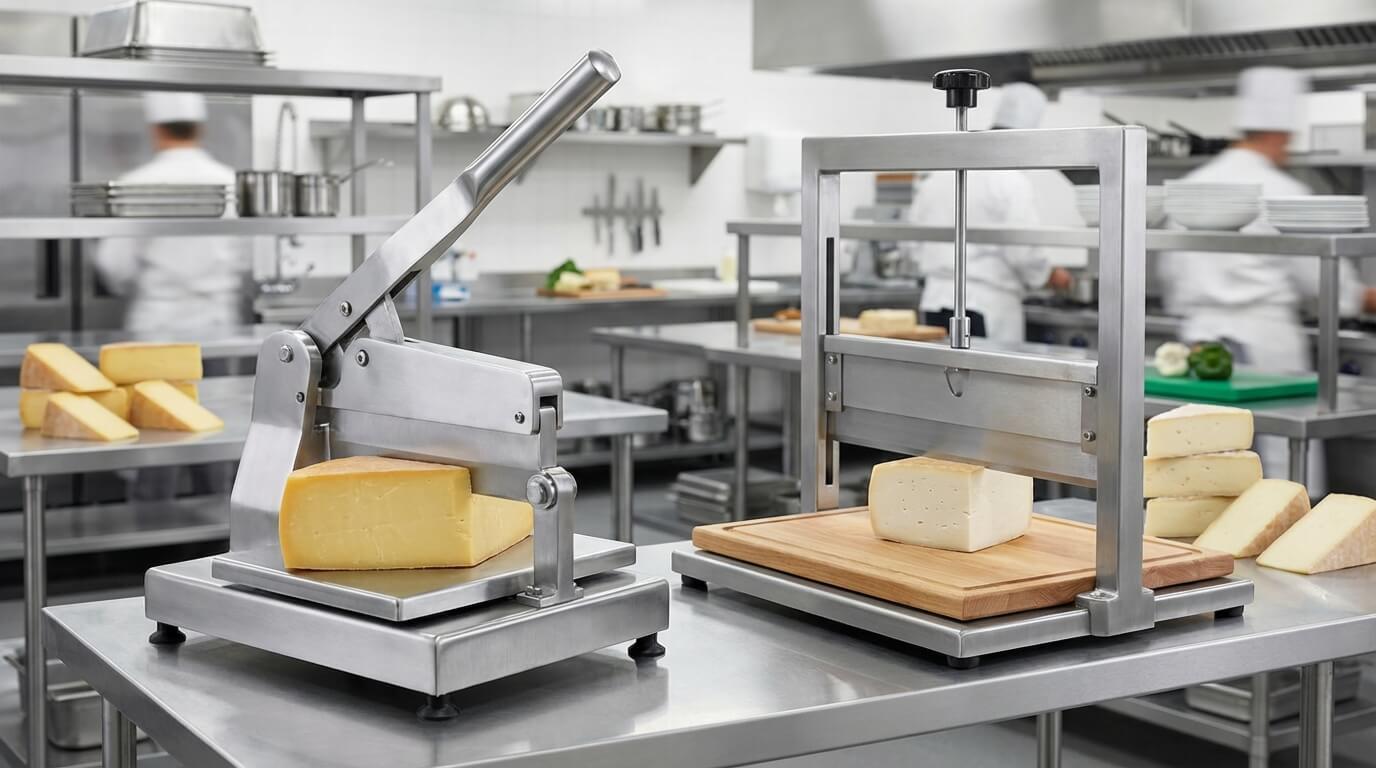
Lever-style or guillotine slicers apply downward force for cleaner cuts through firm and semi-hard cheeses. They’re ideal for consistent wedges and thicker cuts.
What to Look For
- Heavy-duty hinge and stable platform
- Serrated or non-stick blades for dense cheeses
- Clear hand guards and ergonomic handle
Front-of-House Plane and Rolling Slicers
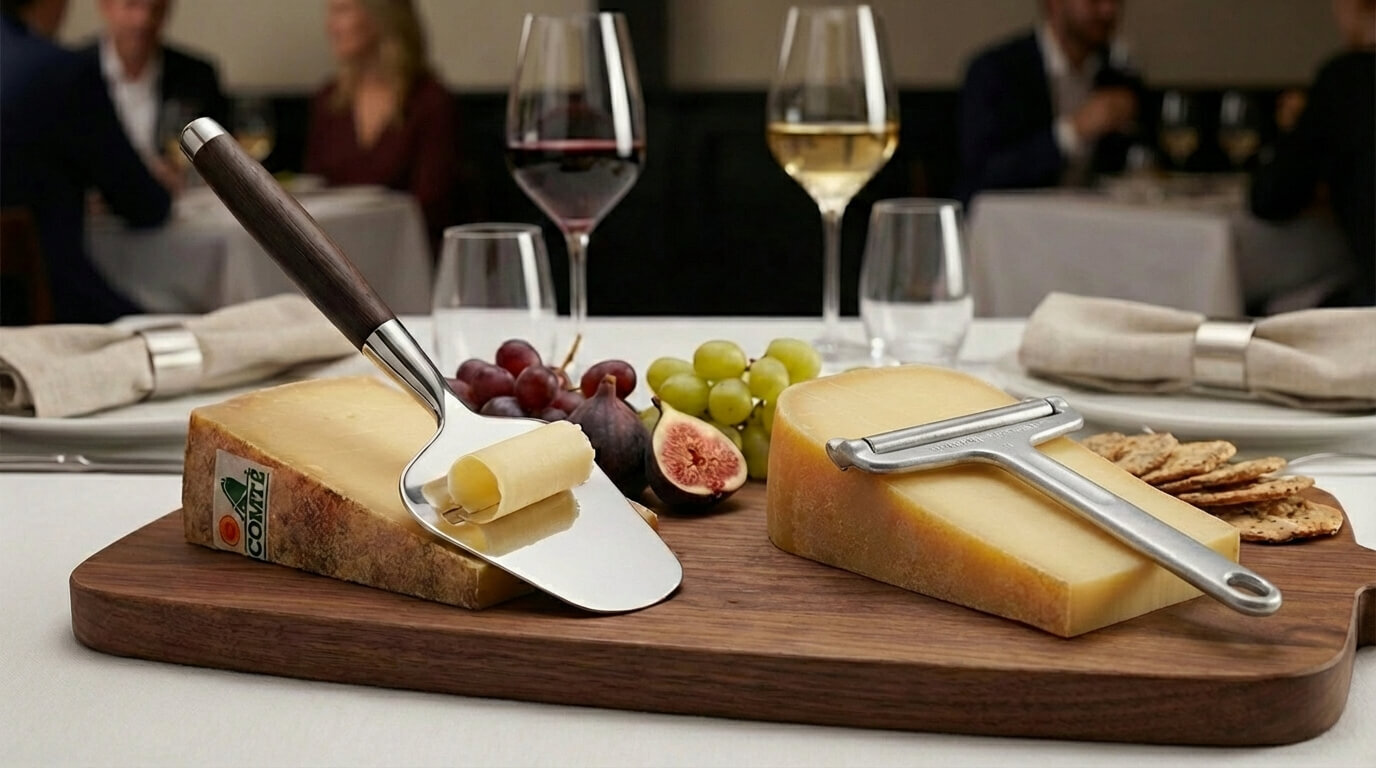
For cheese boards and guest-facing service, plane slicers and rolling trimmers offer thin, attractive shavings or slices. They’re best for finishing touches rather than high-volume prep.
How to Choose the Right Slicer
Menu and Volume
Match your cheese slicer to your busiest hour. High-throughput delis and sandwich shops benefit from powered slicers; lighter operations may rely on wire or guillotine tools for specific cheeses.
Cheese Variety
Soft and semi-soft cheeses respond well to wire and coated blades. Hard cheeses need rigidity, leverage, or slower blade speed and serration. If your program includes both, consider a powered slicer plus a wire board.
Sanitation and Durability
Look for NSF-listed equipment with minimal crevices, removable parts, and dishwasher-safe components. Stainless steel and anodized aluminum are durable and easy to clean.
Safety Features
- Hand guards, cut-resistant gloves policies, and non-slip bases
- Interlocks and automatic blade stop on powered units
- Stable, wide stances on manual gear to prevent rocking
How to Use a Cheese Slicer Safely and Effectively
Knowing how to use a cheese slicer properly improves consistency and extends the life of your equipment.
Powered Slicer Steps
- Chill the cheese: cold cheese slices cleaner and sticks less.
- Square the block: trim to create a flat contact with the carriage.
- Set thickness: start slightly thicker; dial down to desired thinness.
- Use the pusher: keep hands behind guards; steady, even passes.
- Wipe and lube: occasionally wipe the blade and apply a food-safe anti-stick spray or a damp cloth between runs.
- Clean thoroughly: unplug, disassemble, and sanitize after service.
Wire/Manual Slicer Steps
- Pre-chill and portion: cold, manageable blocks reduce breakage.
- Adjust guides: set for uniform slice thickness.
- Smooth, single motion: press or draw the wire steadily without sawing.
- Maintain tension: replace or tighten wires that bow or fray.
Pick Your Cheese Slicer by Use Case
Best cheese slicer for block cheese
For full or half blocks, a commercial powered slicer with a 12–14 inch, coated blade and a wide carriage is ideal. It offers precise thickness control and speed for sandwich lines. In prep, a board-style wire slicer with an adjustable fence efficiently portions blocks into consistent slabs for later finishing on a powered slicer.
Best cheese slicer for hard cheese
Dense cheeses like aged cheddar, manchego, or parmesan require rigidity and leverage. A guillotine or lever slicer with a serrated or non-stick blade handles semi-hard to hard varieties well. For extremely hard cheeses (e.g., parmesan), consider portioning into wedges with a hard-cheese knife, then finishing with a guillotine. For shaved applications, a rotary grater or plane may outperform traditional slicers.
Best cheese slicer for thin slices
Paper-thin slicing favors a powered deli slicer with fine micro-adjustments, sharp coated blades, and chilled product. For front-of-house presentation, a high-tension adjustable wire slicer can produce delicate, even slices if the cheese is well-chilled and the wire is taut.
Can you freeze cheese slices?
Yes, you can freeze cheese slices, especially firm and semi-hard varieties. Expect a slight texture change (more crumbly) after thawing, which is usually fine for cooking and sandwiches under heat. To freeze: separate slices with parchment, wrap tightly in plastic or vacuum-seal, place in a freezer bag, label, and use within 2–3 months. Thaw slowly in the refrigerator for best results. Avoid freezing soft, high-moisture cheeses, which may weep and lose structure.
Daily Best Practices
- Keep cheese cold before slicing; stage small batches to minimize sweating.
- Use food-safe anti-stick sprays or lightly dampen a cloth to wipe blades.
- Rotate blocks to maintain flat contact and uniform pressure.
- Track yields and standardize thickness settings to control costs.
FAQ: Commercial Cheese Slicers
What blade works best for cheese on a powered slicer?
A smooth, Teflon-coated blade reduces sticking on soft and semi-soft cheeses. For denser cheeses, a lightly serrated blade can improve bite. Keep blades sharp and clean for the best results.
How often should I replace the wire slicer wires?
Replace when you notice bowing, fraying, or tearing rather than cutting. In busy kitchens, that may mean every few weeks; in lighter use, every few months. Always keep spare wires on hand.
How do I prevent cheese from sticking to the blade?
Start with chilled cheese, use coated blades or anti-stick food-safe sprays, and wipe the blade periodically. Adjust speed and pressure to avoid smearing.
What thickness is best for sandwiches and boards?
For sandwiches, 1–2 mm offers good melt and mouthfeel. For cheese boards, 2–3 mm provides structure while remaining tender. Adjust to your cheese style and customer preference.
