





Rice Steamer Ratio: The Exact Water-to-Rice Guide for Perfect Grains Every Time
2026 Apr 24th
Getting consistently fluffy rice starts with nailing the rice steamer ratio. Whether you own an electric rice cooker, a countertop rice steamer, or you use a steaming basket over a pot, the right rice-to-water ratio— and a few small technique tweaks make all the difference. Below, you’ll find clear ratios by rice type, simple steps for how to use a rice steamer, and pro tips to help you master how to steam rice for your preferred texture.
What the Rice Steamer Ratio Really Means
Rice steamer ratio refers to how much water you add for every part of rice when cooking in a rice cooker or steamer. Most modern cookers use either:
- Standard measuring cups (240 ml);
- The included “rice cup” (about 180 ml) with interior water lines.
If your cooker has inner pot lines, prioritize those: they’re calibrated for the included cup and the appliance’s evaporation rate. If you’re measuring with regular cups, use the guidelines below and adjust slightly based on your rice brand and texture preferences.
Rice-to-Water Ratios by Type
These starting points assume rinsed rice (except glutinous), sea-level altitude, and typical electric rice cookers. “1 cup” refers to a standard measuring cup unless noted.
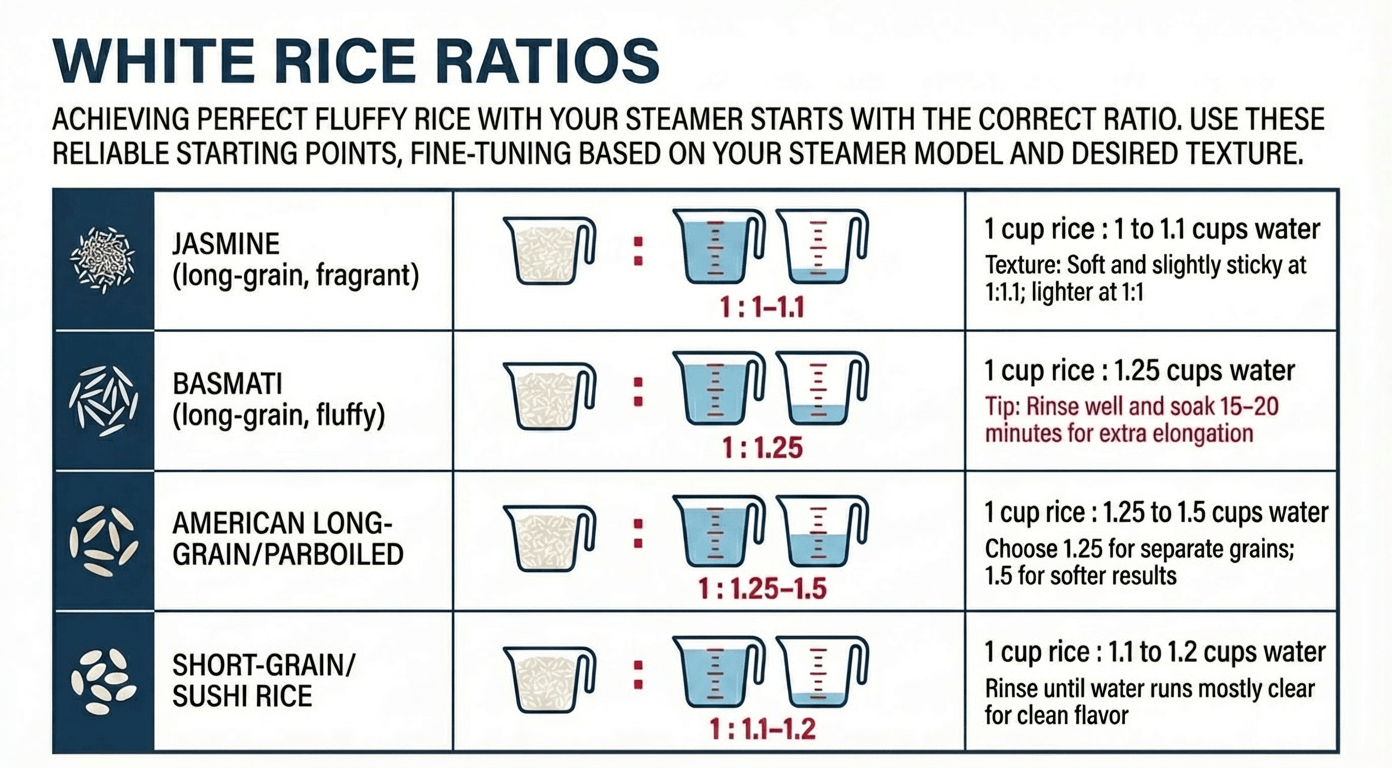
White Rice Ratios
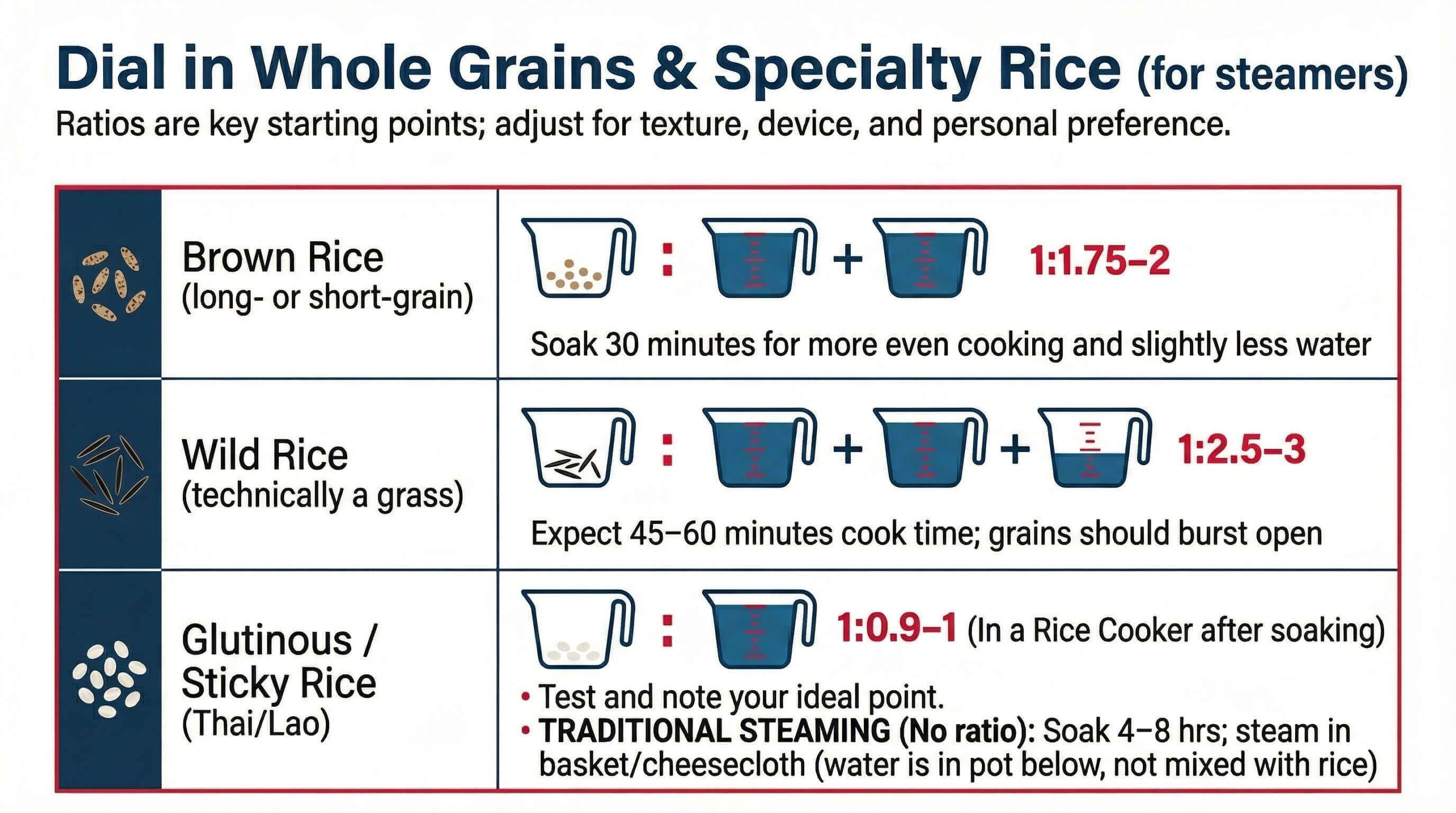
Whole Grains and Specialty
How to Use a Rice Steamer (Step by Step)
If you’re learning how to use a rice steamer for the first time, follow this simple process. It works for most electric rice cookers and dedicated rice steamers.
Step-by-Step: How to Steam Rice in a Rice Steamer
- Measure: Add rice to the inner pot (use the cooker’s 180 ml cup if provided).
- Rinse: Swirl with cool water and drain 2–4 times until mostly clear (skip for glutinous rice if you plan to steam traditionally).
- Add water: Use the rice steamer ratio above or fill to the matching line number in the pot.
- Flavor (optional): Add 1/2 teaspoon salt per cup of rice, 1 teaspoon oil or butter, or aromatics like bay leaf or a smashed garlic clove.
- Cook: Close the lid, select White/Brown/Quick mode as appropriate, and press Start.
- Rest: When the cooker switches to Warm, let the rice stand 10 minutes to finish steaming.
- Fluff: Use a rice paddle to gently fluff and release excess steam.
Optional: Rinsing and Soaking
- Rinsing reduces surface starch for cleaner, less gummy grains.
- Soaking (15–30 minutes for white; 30–60 minutes for brown; several hours for glutinous) promotes even hydration and can slightly shorten cook time.
Troubleshooting the Rice Steamer Ratio
- Too firm/dry: Add 2–4 tablespoons hot water, close, and steam on Warm for 5–10 minutes next time increase the ratio by 0.05–0.1 cup per cup rice.
- Too soft/mushy: Reduce water by 0.05–0.1 cup per cup rice and rinse thoroughly; avoid lifting the lid mid-cook.
- Different cups: The included rice cup is 180 ml. If you switch to a 240 ml cup, adjust proportionally or rely on the pot’s water lines.
- Altitude and age: High altitude and older/drier rice often need slightly more water; newly harvested rice may need less.
- Batch size: Larger batches trap steam better; small batches may need a touch less water to avoid sogginess.
Pro Tips for Flavor and Texture
- Use quality water: Filtered water can noticeably improve taste.
- Let it rest: The 10-minute rest after cooking is non-negotiable for even texture.
- Keep lids closed: Opening during cooking upsets the steamer’s humidity balance.
- Aromatics: For pilaf-style flavor, sauté rinsed, drained rice in a teaspoon of oil in the cooker (if safe for your model) before adding water.
- Storage: Cool quickly and refrigerate within 1 hour. Reheat with a sprinkle of water and cover to re-steam.
FAQ: Rice Steamer Ratio and Techniques
What is the best rice steamer ratio for white rice?
Start with 1:1 for jasmine, 1:1.25 for basmati and standard long-grain, and 1.1–1.2:1 for short-grain. Adjust by small increments (about 1 tablespoon per cup) to match your texture preference and your specific cooker.
How do I use the water lines inside my rice cooker?
Measure rice with the included 180 ml cup, level it, then add water up to the corresponding line number (e.g., “2” for two rice-cup measures). The lines are calibrated for that cup and the appliance’s evaporation rate.
Why is my rice mushy even when I follow the ratio?
Common causes include inadequate rinsing, opening the lid mid-cook, using a non-standard cup without adjusting, or a very small batch. Reduce the water slightly and let the rice rest 10 minutes before fluffing.
Can I add broth instead of water?
Yes. Substitute 1:1 with low-sodium broth and reduce added salt. For very salty broths, dilute with some water to avoid oversalting.
Do I need to soak brown rice?
Soaking 30–60 minutes helps tenderness and reduces cook time. If you don’t soak, use the higher end of the ratio (close to 2:1) and allow a full natural rest on Warm.
