





Rice Cooker Ratio: The Exact Water-to-Rice Guide (Plus Realistic Cook Times)
2026 Mar 13th
Getting the rice cooker ratio right is the fastest way to consistent, fluffy rice. Whether you cook jasmine, basmati, brown, or sticky rice, small tweaks in water and time make a big difference. This guide breaks down reliable water-to-rice ratios for popular varieties, explains how much time rice cooker takes to cook rice for each type, and shows you how to adjust for texture, altitude, soaking, and more.
Understanding Rice Cooker Ratios
Rice-cooker cups vs. standard cups
Most rice cookers include a “rice cup” that holds 180 ml (about 3/4 of a US cup). If you use the included cup and the inner pot’s water lines, your rice cooker ratio is already baked in. If you use a US measuring cup (240 ml), measure both rice and water with the same cup so the proportions stay accurate.
Rinsing and soaking change the math
Rinsing removes surface starch, yielding fluffier grains and often requiring slightly less water (about 1-2 tablespoons less per cup of dry rice). Soaking reduces cook time and can also lower the required water by about 1-2 tablespoons per cup. These small shifts affect how much time the rice cooker takes to cook rice because pre-hydrated grains heat through faster.
Use the cooker’s water lines when available
The inner pot lines are calibrated for common rice types using the included cup. If you stick to those lines, you rarely need to calculate ratios. The “knuckle method” can work in a pinch, but precise measuring is more dependable, especially for brown or specialty rice.
Recommended Water-to-Rice Ratios and Cook Times
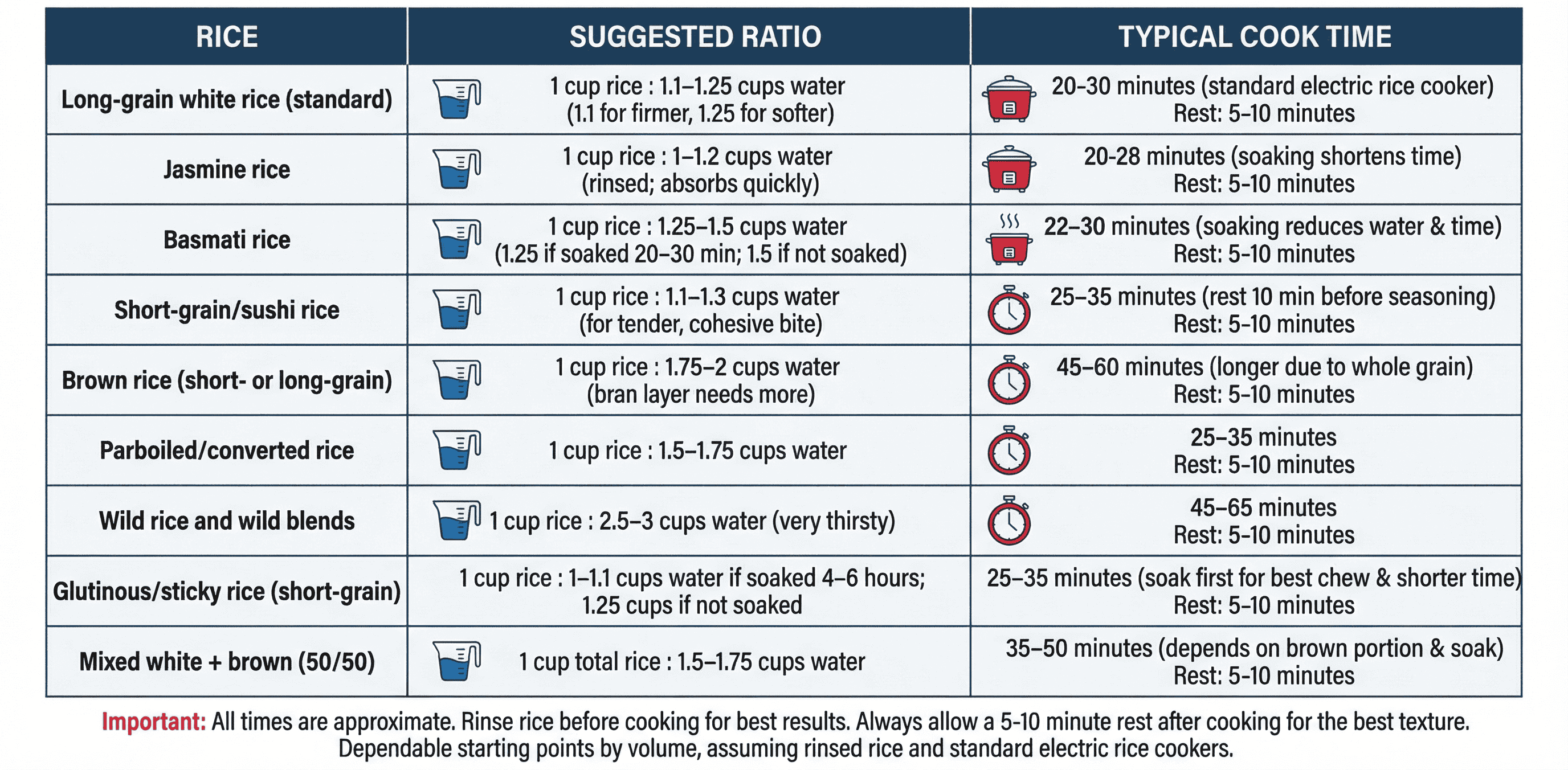
Below are dependable starting points by volume, assuming rinsed rice and standard electric rice cookers. Always allow a 5-10 minute rest after cooking for the best texture.
How to Adjust Ratios for Texture and Conditions
Softer vs. firmer rice
For softer rice, add 2–3 tablespoons more water per cup. For firmer, subtract 2 tablespoons. Small changes go a long way without causing gumminess.
Altitude, age of rice, and cookware
At high altitude or with very dry/older rice, increase water by 2–4 tablespoons per cup and expect a slightly longer cook. Fuzzy-logic cookers may increase how much time rice cooker takes to cook rice as they adapt to moisture and temperature.
Add-ins and seasoning
Broth, tomatoes, or sauces contribute liquid. Reduce water to account for them. A teaspoon of oil or butter can reduce sticking without changing the ratio much; salt doesn’t affect absorption significantly.
Step-by-Step: Measuring and Cooking Perfect Rice
- Measure rice with the cooker’s cup; level it.
- Rinse until water is mostly clear; drain well.
- Add water to the correct line or use the suggested ratio.
- Start the cooker. Typical white rice finishes in 20–30 minutes; brown takes 45–60.
- Let rice rest, lid on, for 5–10 minutes; then fluff with a fork or paddle.
Troubleshooting Quick Fixes
Too wet or mushy
Next time, reduce water by 2–3 tablespoons per cup. For the current batch, vent the lid and let it sit on “warm” 5–10 minutes to evaporate excess moisture.
Too dry or undercooked
Sprinkle 2–4 tablespoons hot water over the rice, close the lid, and run a brief cycle or keep on “warm” 10 minutes. Increase water slightly next time.
Sticking or scorching
Rinse more thoroughly, add a teaspoon of oil, and avoid opening the lid during cooking. Nonstick pots help.
FAQ: Rice Cooker Ratio and Timing
What is the best rice cooker ratio for white rice?
Start with 1 cup rice to 1.1–1.25 cups water for long-grain white. Jasmine leans closer to 1–1.2. Use the inner pot lines if your cooker provides them.
How much time does a rice cooker take to cook rice?
White rice: 20–30 minutes; jasmine/basmati: 20–30; short-grain: 25–35; brown: 45–60; wild: 45–65. Resting 5–10 minutes after the cycle improves texture.
Do I need to change the ratio if I rinse the rice?
Often yes, reduce water by about 1–2 tablespoons per cup to compensate for surface moisture after rinsing.
Should I soak rice before using a rice cooker?
Soaking is optional for white rice but helpful for basmati (20–30 minutes) and sticky rice (4–6 hours). It can slightly reduce both the amount of water needed and how much time rice cooker takes to cook rice.
Can I scale the ratio for big batches?
Yes. Keep the same ratio and do not fill past the cooker’s max line. Larger batches may extend cook time a few minutes.
Why is my rice still hard when the cooker clicks off?
The ratio may be low, the rice may be older/drier, or you opened the lid mid-cycle. Add a few tablespoons of hot water, run a quick cycle or rest on “warm,” and increase water slightly next time.
